
I encourage you to read the first installment of this series if you have not already done so. You can play unlimited puzzles at lichess.org, which is where I got these examples from. Without further ado, let’s begin.
Easy Puzzle
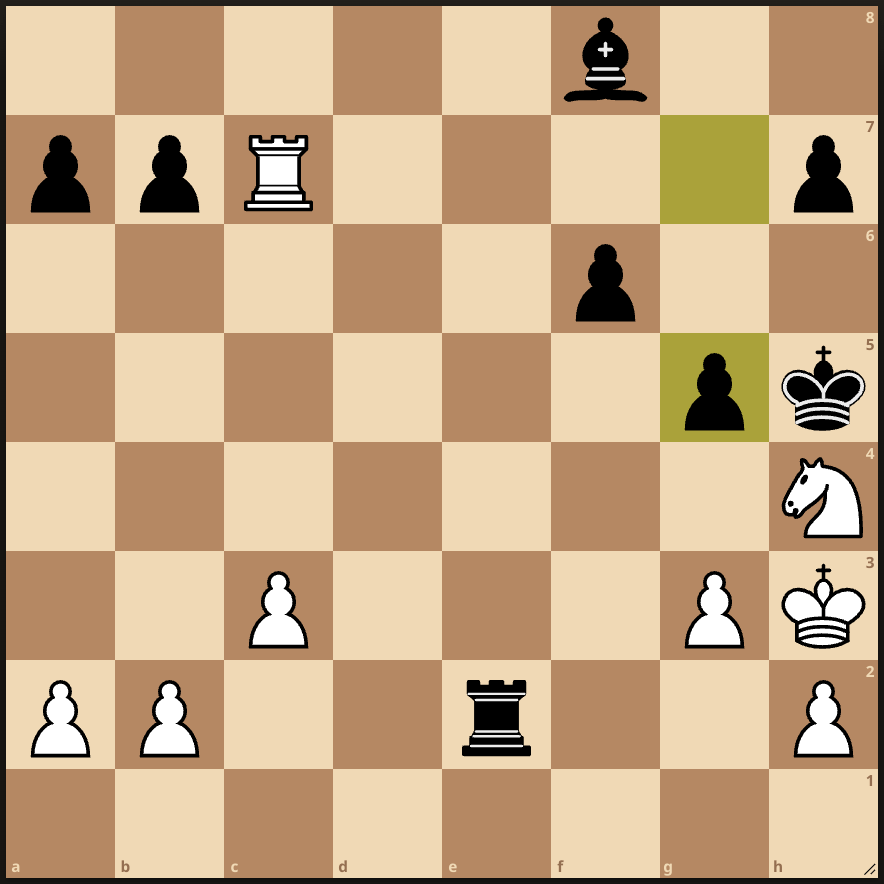
This one is a little trickier than a basic puzzle. I am playing white, and my knight is under attack from the pawn on G5. Should I move the knight, or is there a better move? Remember, one of the things to look for is a way to give check to the opposing king. It turns out there are two here, can you see them?
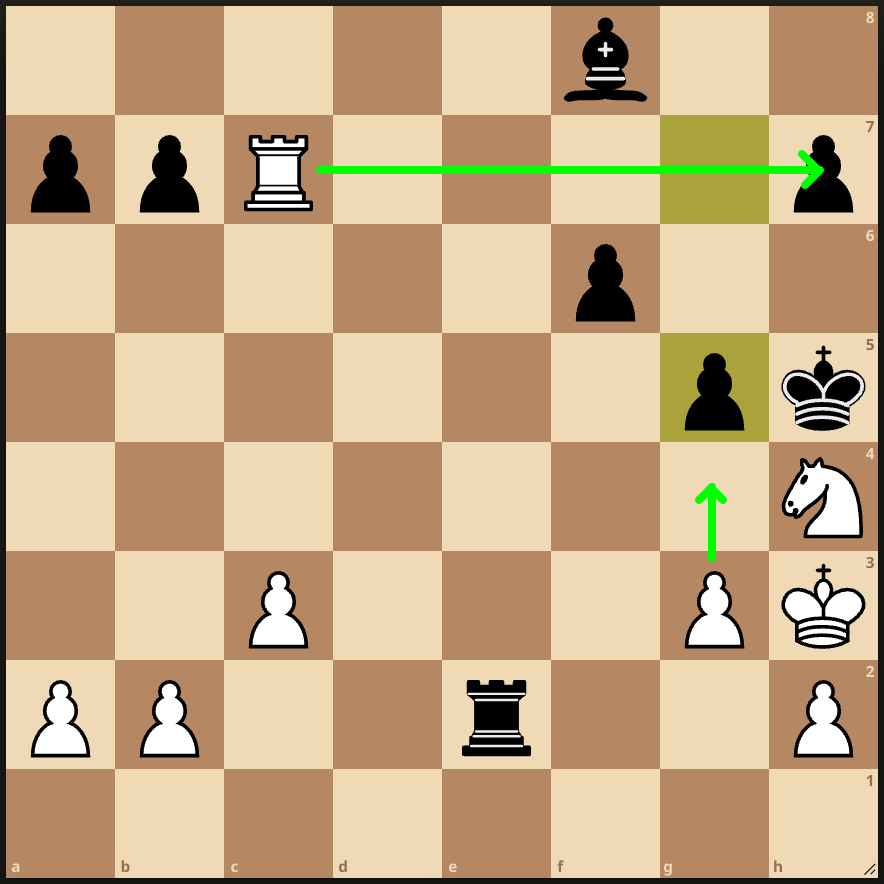
My rook can take the pawn on H7, giving check, or my pawn can move to G4. Which move is stronger?
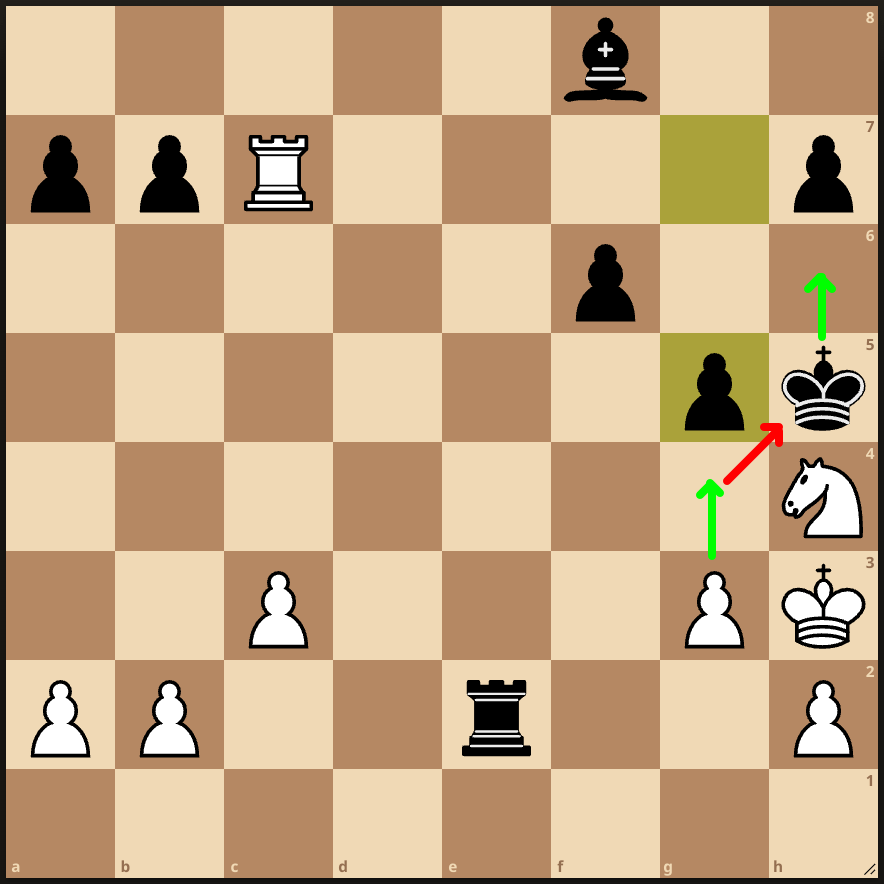
If I give check with the pawn, the king can escape to H6 and defend the pawn on H7. This prevents my rook from attacking the king. Instead of the pawn push, let’s give check with the rook.
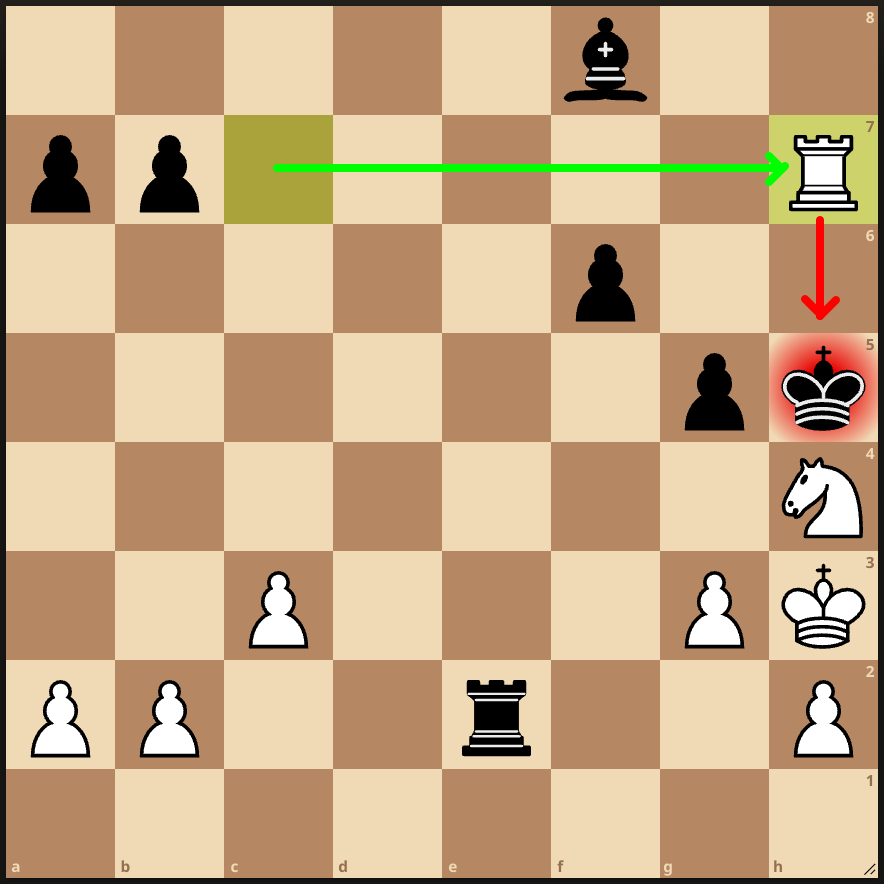
Rook takes pawn on H7 is the stronger move, because the white king has nowhere to go. It is checkmate unless black can block my rook.
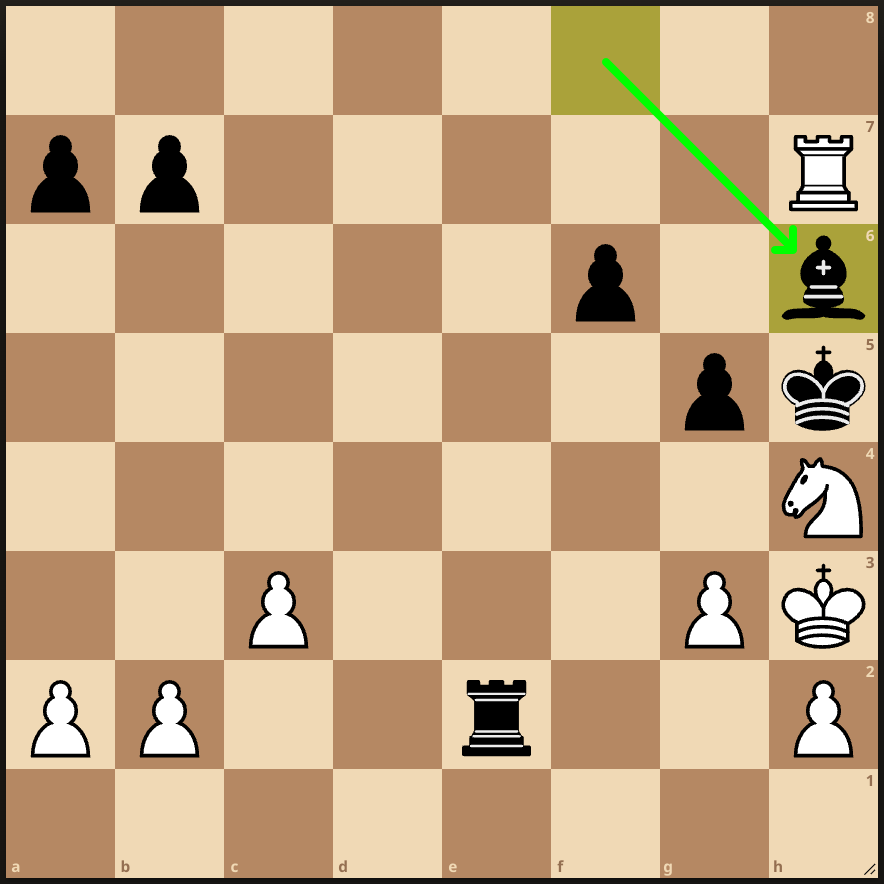
After the black bishop blocks, I have one more bullet in the chamber, pawn to G4, check.
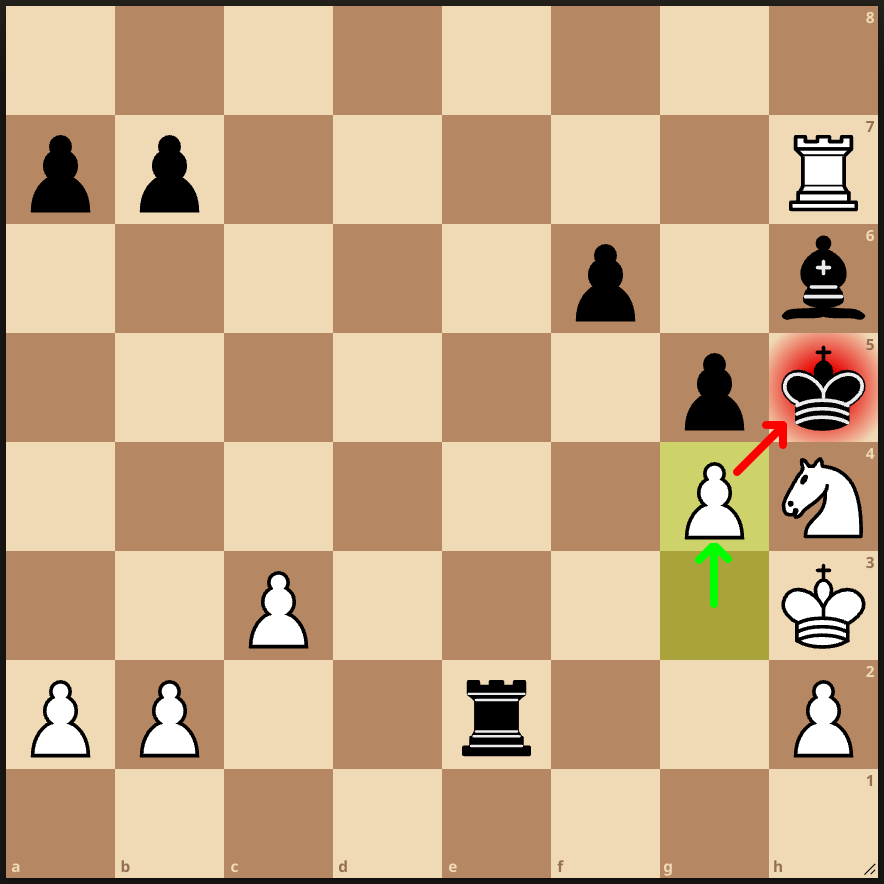
This is checkmate, up close and personal. No way to block, no place to run. This puzzle illustrates the concept of the mating net.
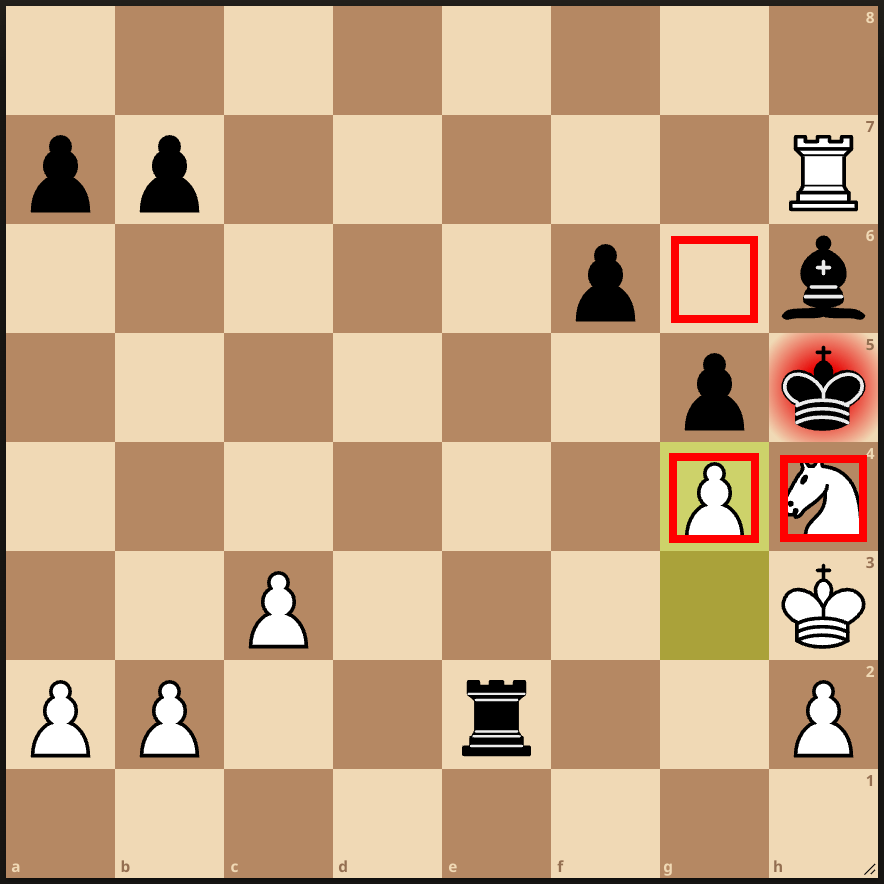
The mating net consists of the piece giving check and the others attacking all available squares to the opponent’s king. G6 is covered by the knight, while G4 and H4 are covered by the king. This mating net is relatively easy to see because of the limited squares around the king. Visualizing a mating net is key to formulating an attack, and avoiding missed chances to win a match.
Medium Puzzle
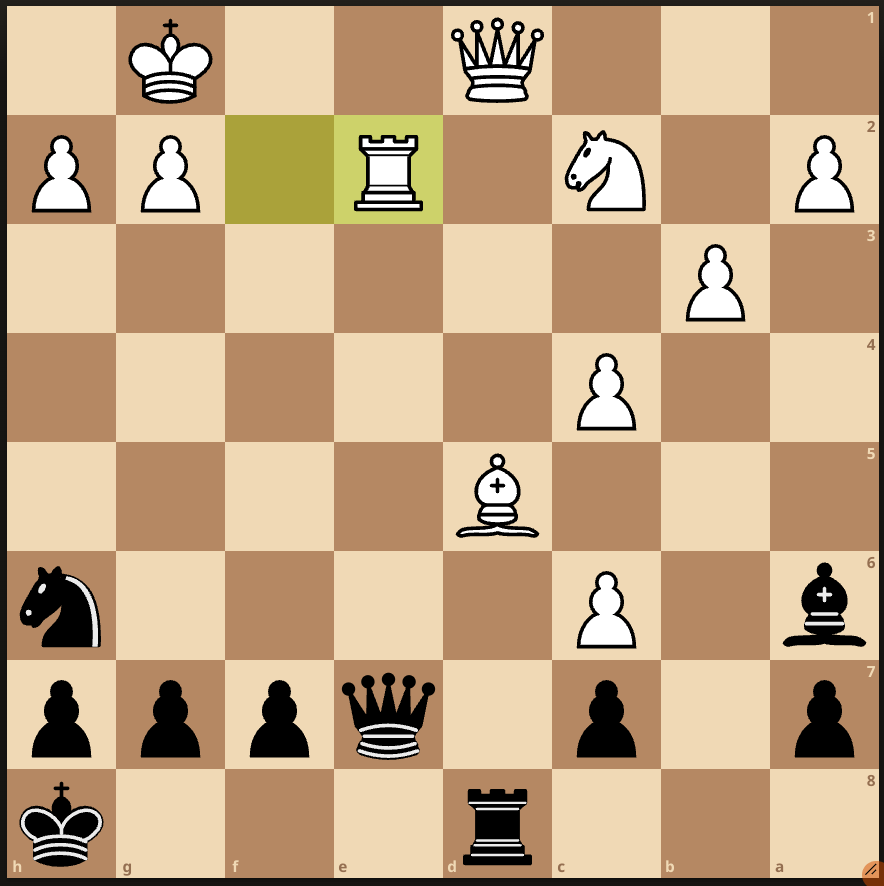
Here, my black queen is under attack from the rook on E2. Should the queen escape along one of the dark diagonals, maybe put the white king in check? Instinctively, we want to save the queen, but is there some kind of combination that can be triggered by taking a piece? I can take the white rook or bishop, but they are both defended.
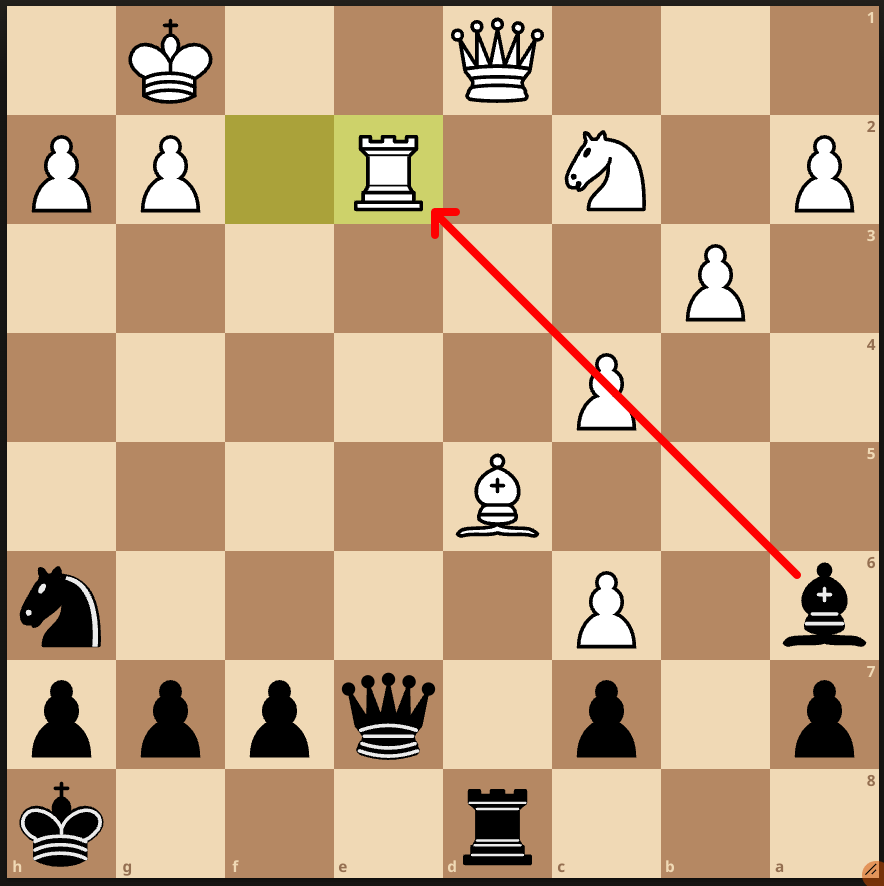
The key to this puzzle is to see the black bishop on A6 is x-raying the rook on E2. If the C4 pawn moves, then I can take the rook. In proper chess parlance, the pawn on C4 is pinned by the black bishop. Note that if the bishop took the rook on E2, it would be defended by the black queen, and white’s queen would not be able to retake.
Now that you are aware of this pin, what is the best move for black? Hint: which piece is the pawn on C4 guarding?
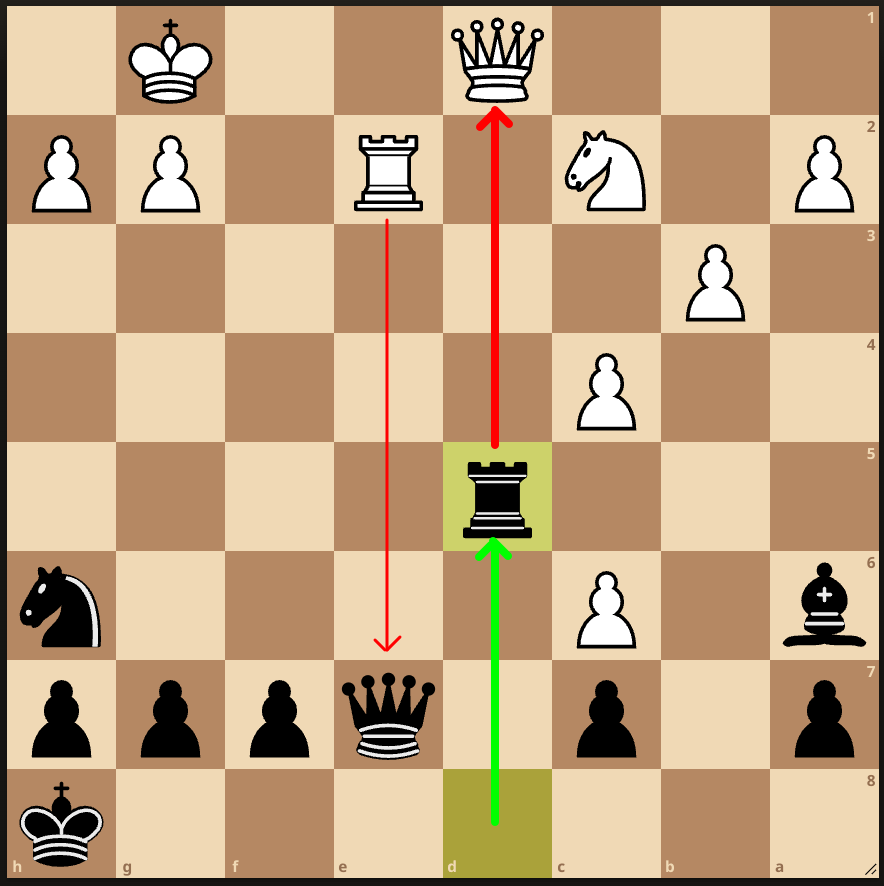
The best move is rook takes bishop on D5. If white retakes with the pawn, I can take white’s rook with my bishop and attack the white queen.
After rook takes bishop on D5 is played, it sets up a standoff. Both queens are under attack by rooks. White can exchange queens, or move the queen to a safe square. Do you see a great square for the white queen? If the black queen is allowed to make another move, it would be to C5 to give check, and then take the white pawn on C6, at the very least.
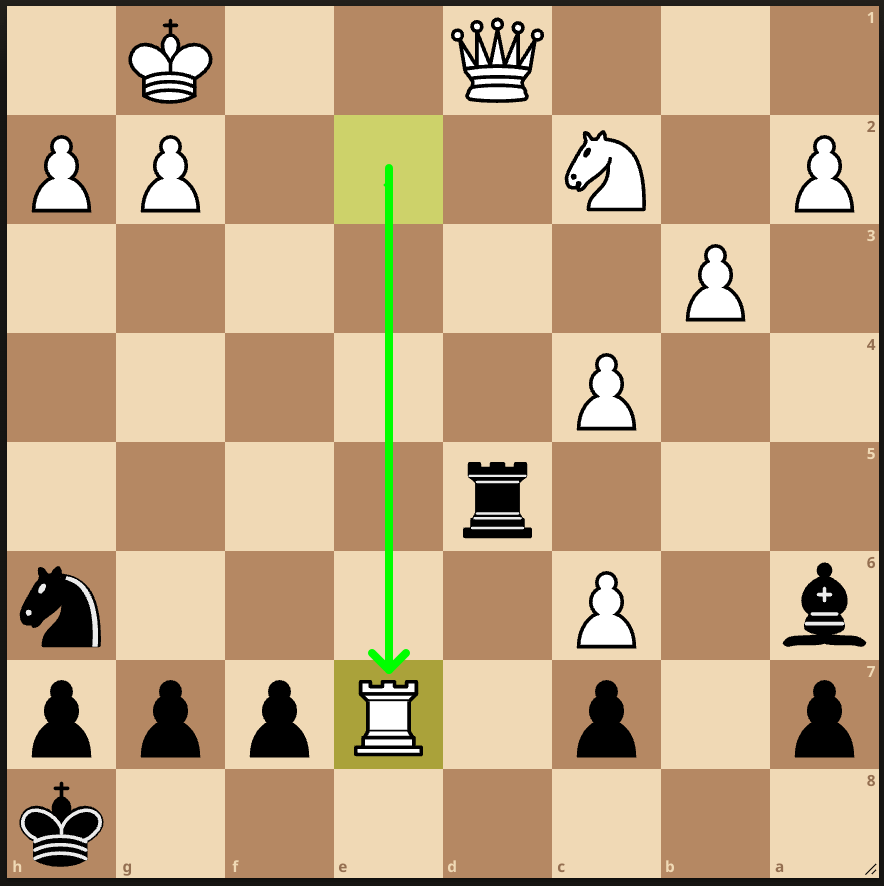
The safe thing for white is to exchange queens. White takes first on E7. The black king looks backed into a corner, but the black knight can block if white decides to check on the eighth rank.
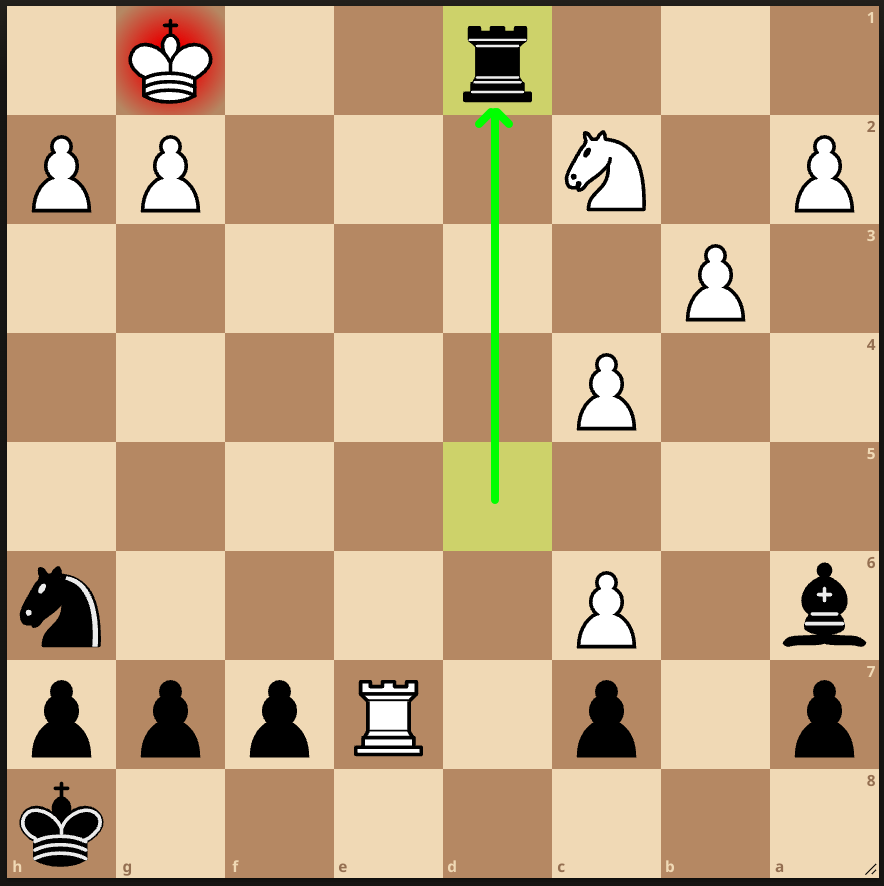
Black takes the white queen and gives check. The puzzle ends here, but it is interesting to think of white’s next move. Black can move the king to F2, block with the rook on E1, or block with the knight on E1. The first two options lead to an exchange of rooks, and black is already up by a bishop.
Hard puzzle
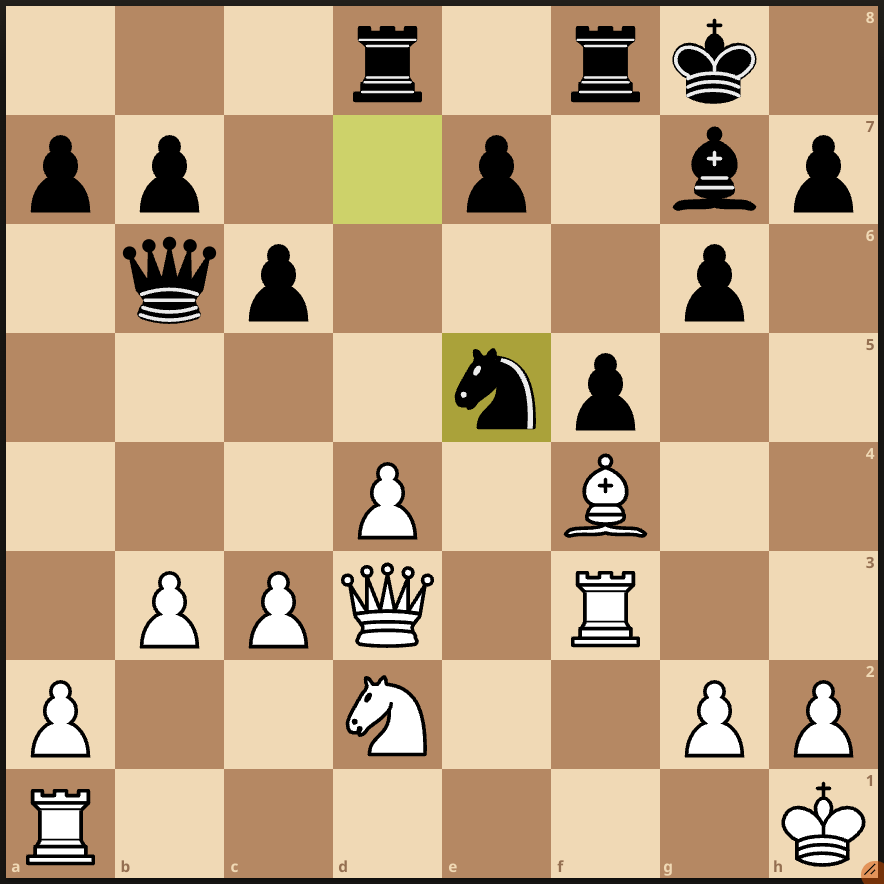
All hard puzzles require you to think a few moves ahead. I did not get this one on the first try. The immediate threat is the black knight on E5. It is forking my queen and rook. Luckily, I can remove it with my pawn or bishop. There are no checkmate threats at the moment, so I can focus on the center knight.
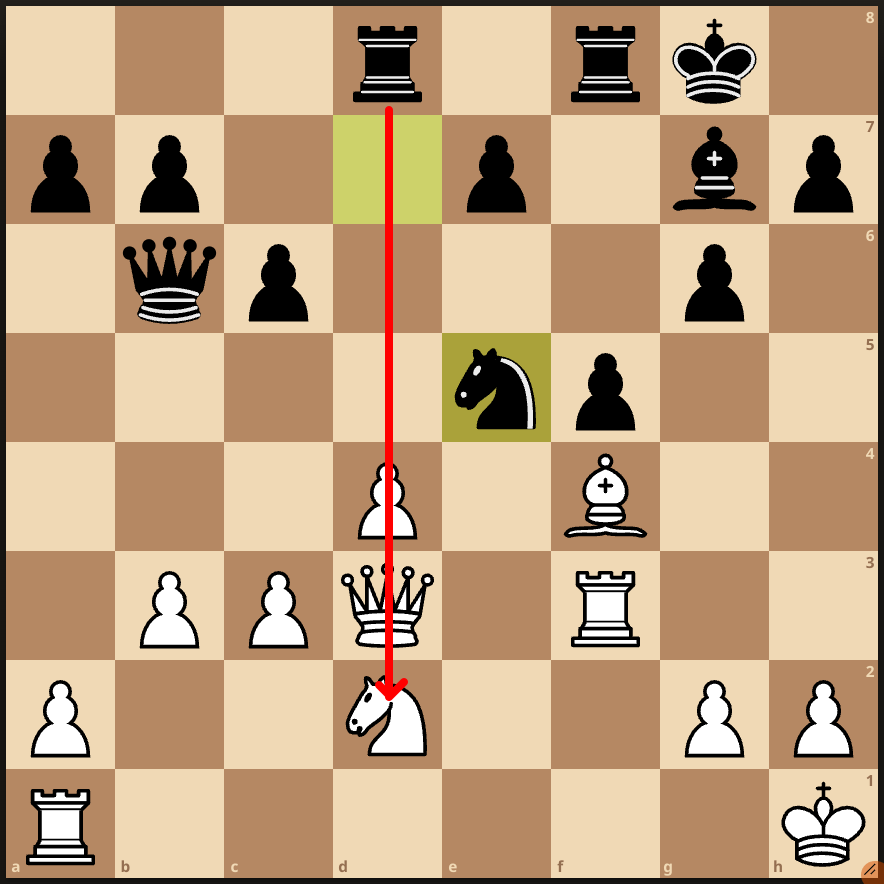
It is important to see that the D4 pawn is pinned. Black’s rook would love to snap up my queen or knight. Until the queen and knight are out of harm’s way, the D4 pawn stays put. Pinning is a really important concept to use if you want to become a strong player.

My bishop takes that pesky knight, attacking the black bishop.

Black retakes with the bishop. I can’t retake with the pawn, unless I wish to lose my queen. This would be all well and good, but since this is a hard puzzle, there is more to it. Do you see a tactic I can use? I can check the black king with my queen, or attack the black queen with my knight. Which move leads to a productive follow up?
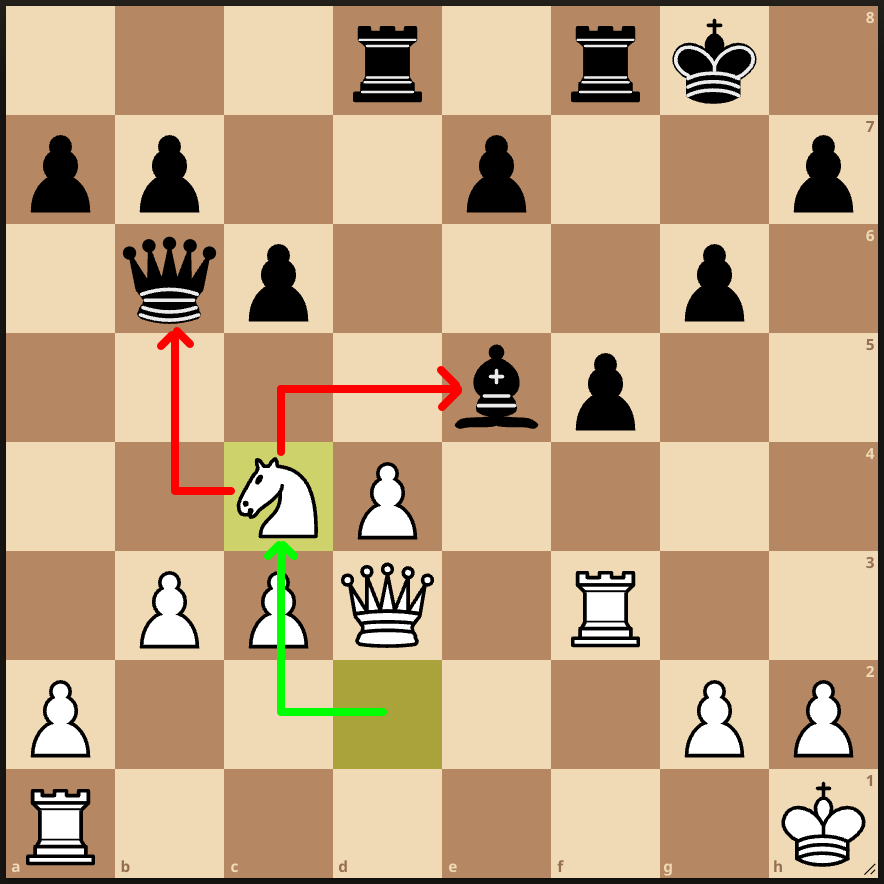
Knight to C4 is a fork on black’s queen and bishop. The queen has to move.
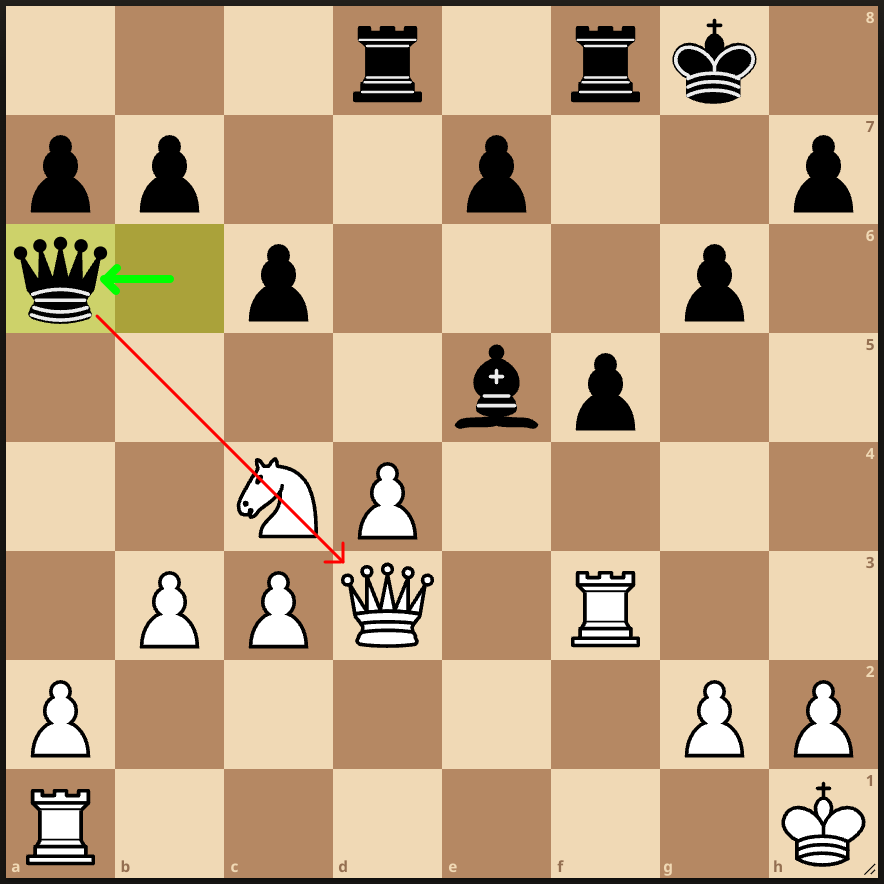
The black queen moves to A6. Notice that she is x-raying my queen, but my queen will be doubly defended after the knight takes bishop on E5.
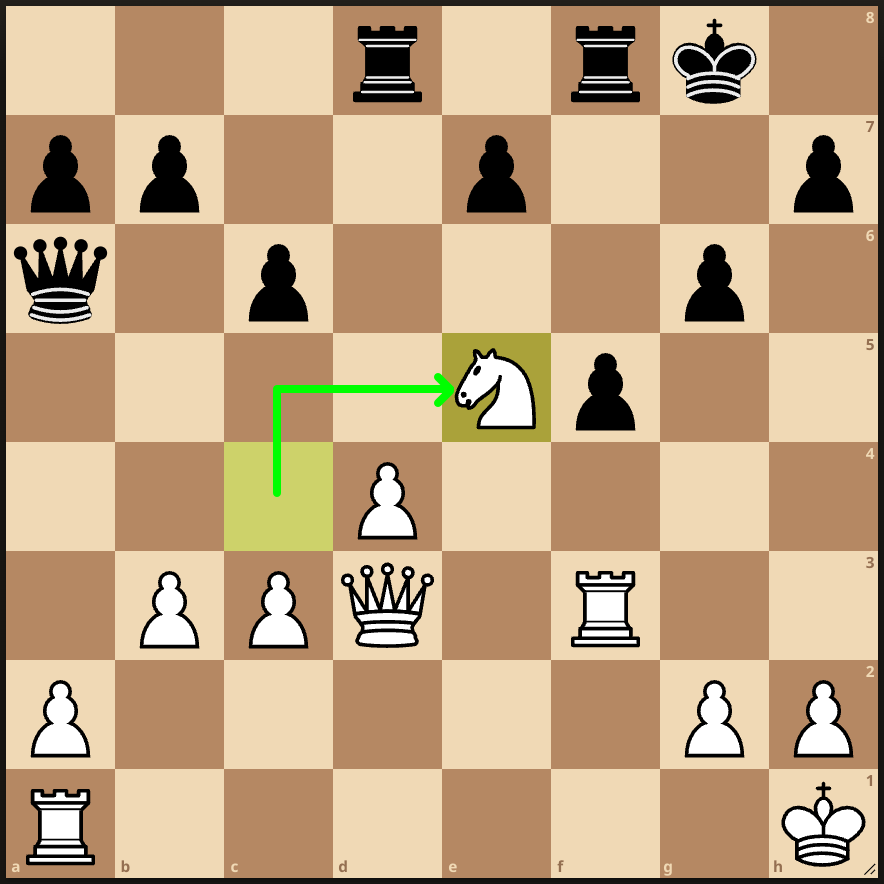
White is now up by a knight. Black can exchange queens, or play a different move. White is very strong in the center and that knight will be an enormous thorn in black’s side.
Conclusion
Puzzles are a great way to learn tactics like pins, forks, batteries, skewers, and so on. If you enjoy reading these explanations, let me know by leaving a comment, and I will write more.
I have been watching live streams on Chess.com’s YouTube channel. The commentators talk a great deal about strategy, so I reckon that is a good way to learn this other side of chess. I also like watching analysis from Mato Jelic’s Chess School channel on YouTube. I hope you have fun playing chess!
 Misanthrope Hobbies