

Chess puzzles are a great way to develop as a player. Puzzles focus on the use of tactics (vs. strategy). As I understand it, strategy comes first, putting one in position to execute a tactic, which is winning a piece or forcing a checkmate. You can get unlimited free puzzles at lichess.org, which is where I got these examples from. I also play puzzles on chess.com, which limits the number of puzzles if you don’t pay for a membership.
When I started with chess puzzles, I had no clue what was going on, even though I understood the rules of chess. It took me a while to get the hang of things, and my progress was not linear. It was more like hopping from one plateau to the next, with plenty of regressions in between. Falling in the rankings can get frustrating, but look at it as a low-stakes opportunity to grow. Before we get started, it might help to know that chess pieces are assigned relative values (Queen = 9 pts, Rook = 5, Bishop = 3, Knight = 3, Pawn = 1).
What I generally consider with a puzzle:
- Are any of my pieces under attack?
- Which of my pieces are undefended?
- Do I need to defend against checkmate?
- Is there a way I can check my opponent’s king?
- Is there a way I can attack my opponent’s queen?
- Which of my opponent’s pieces are undefended?
- Is there the possibility of a fork (double attack) by one of my pieces?
Easy puzzle
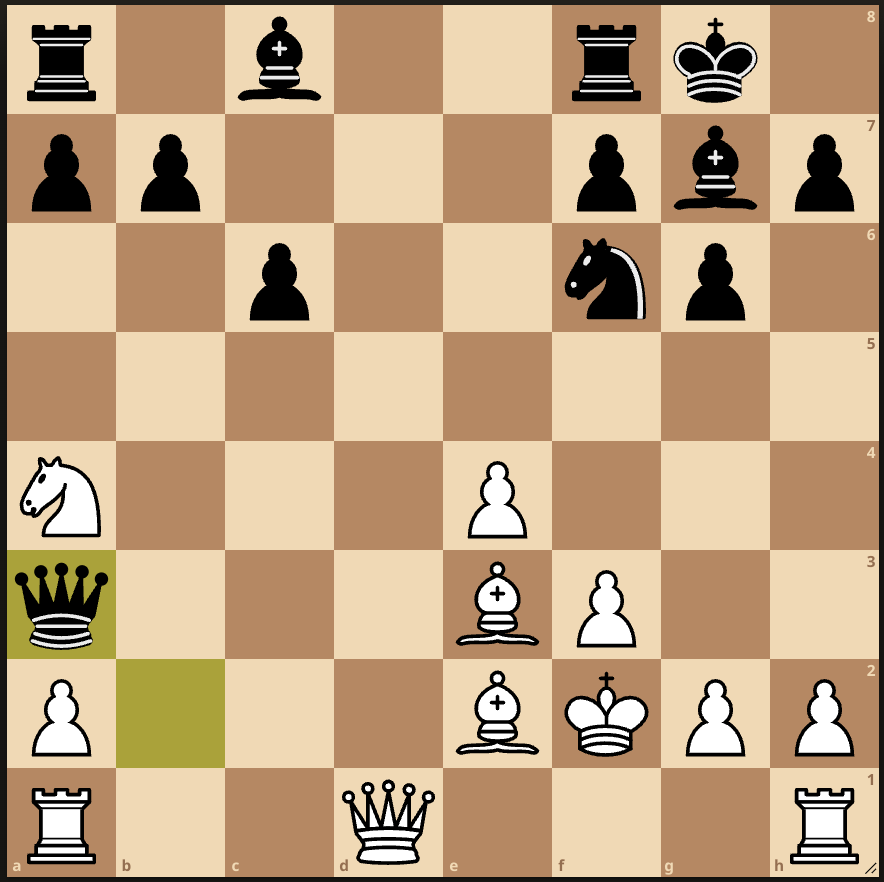
I am playing white. All the black pieces are passively on their side, and all white pieces are defended. There is no immediate way for black to put my king in check. The black queen looks quite lonely, doesn’t she? It turns out one of my pieces has an opportunity to attack the black queen and fork a second piece. Do you see it?
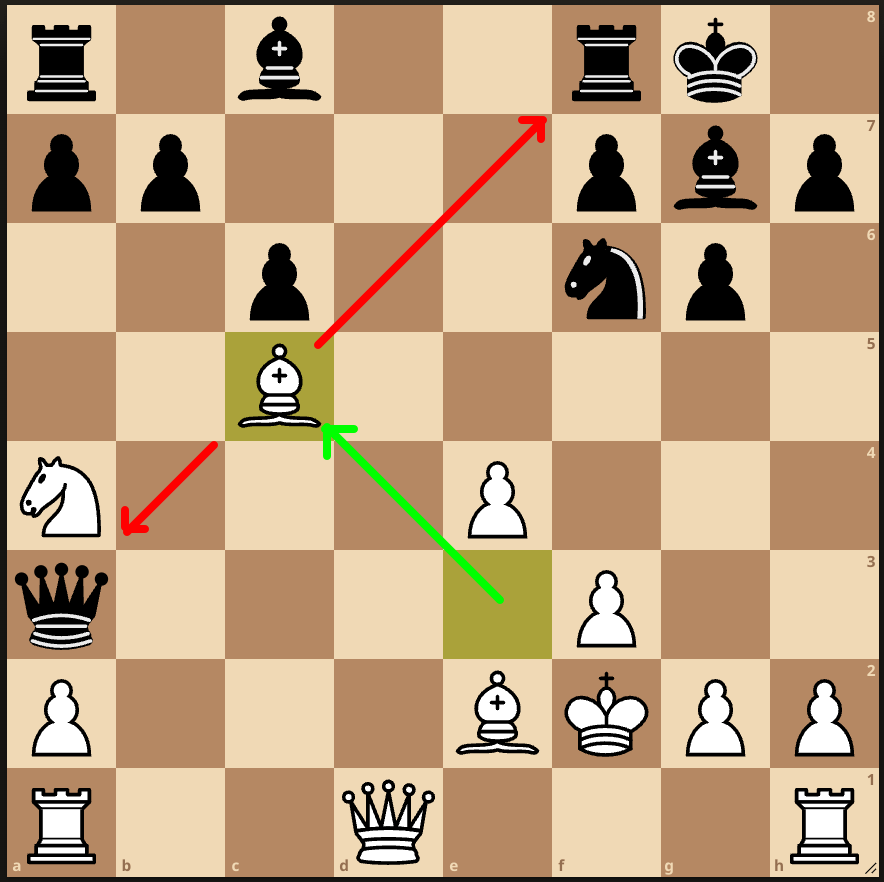
My bishop can move to C5 to attack the black queen on A3 and rook on F8. It is defended by the white knight on A4. Notice the black queen does not have a safe square to escape to. So, she might as well go out by taking her attacker with her.
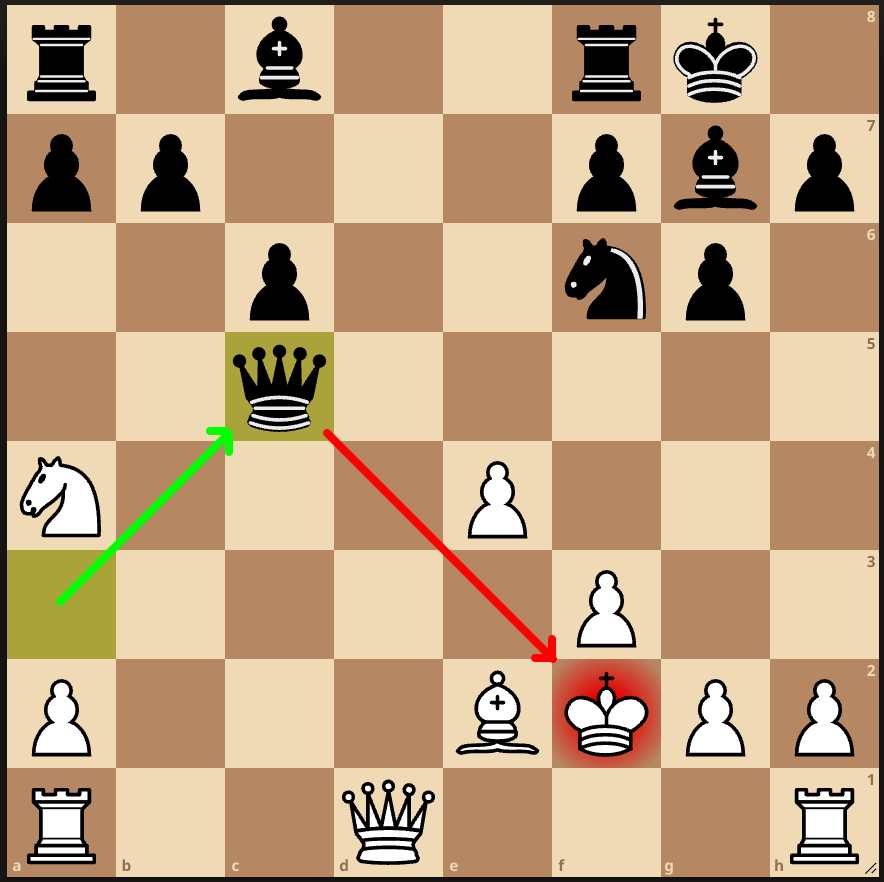
Queen takes bishop on C5, putting the white king in check. Luckily, the knight was defending the bishop.
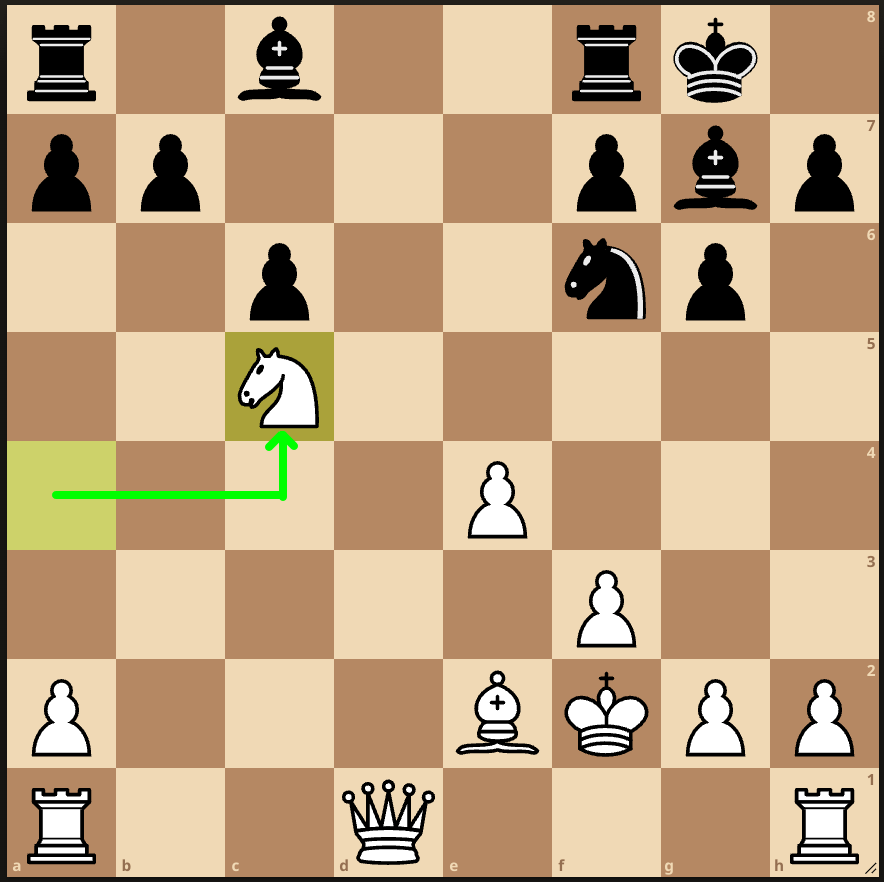
Knight takes queen on C5. For a bishop (3 pts), white won a queen (9 pts). White now has a huge +6 advantage.
Medium Puzzle
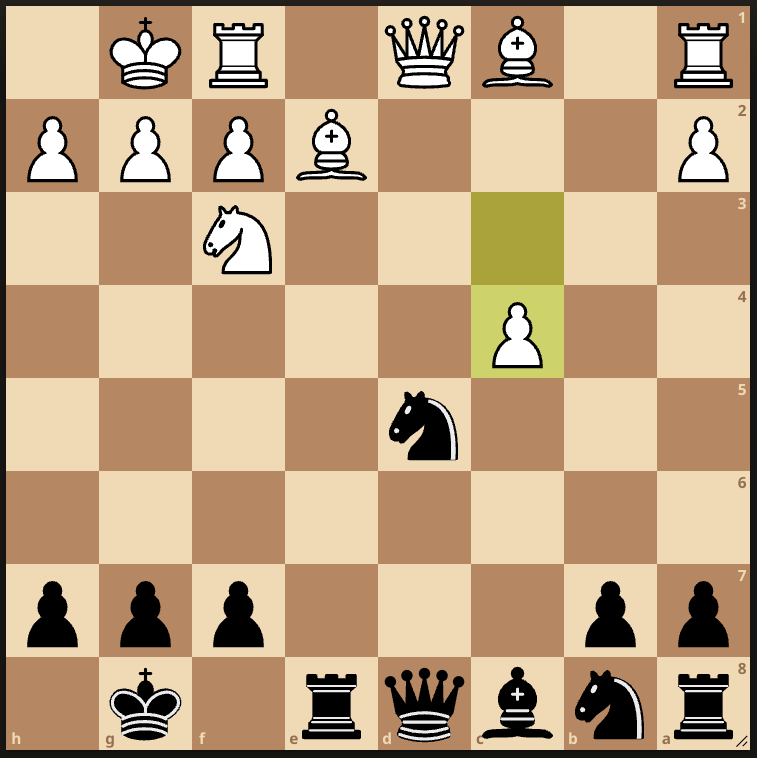
I am playing as black and my knight is under attack from the white pawn. Should I move the knight, or is there a better move? Well, there is no way for me to put the white king in check. Checking my opponent’s king is a way to gain a tempo, forcing them to block or move the king before they can capture my knight. I do not need to defend any pieces, nor am I facing a checkmate threat. How about attacking the queen? Or a fork, which is the knight’s specialty, because its attack cannot be blocked. As it turns out, using the knight to attack the queen is the best move.
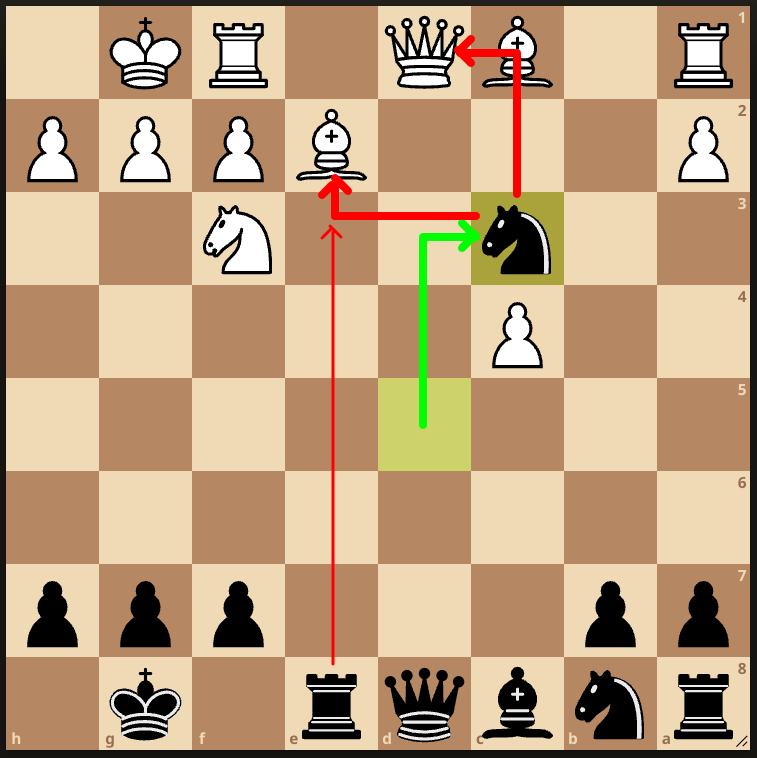
Knight to C3 attacks both the white queen and bishop. Notice the white bishop on E2 is doubly attacked by the black rook on E8. The white queen needs to move, but where? Defending the bishop is not an option because it is attacked twice. The white queen can move to a safe square, or take the black queen on the other side of the board, forcing black to retake with the rook.
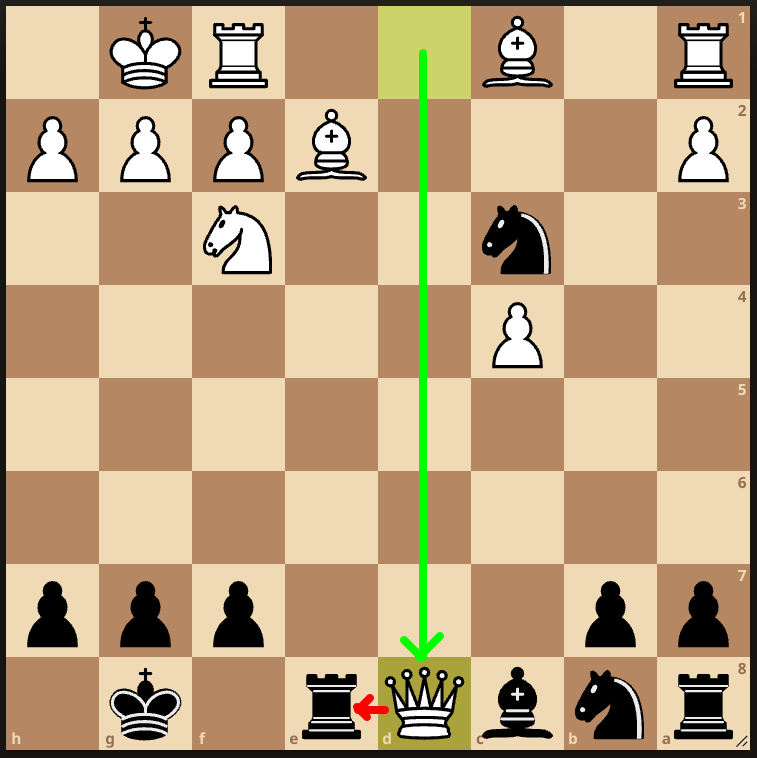
Indeed, taking my queen looks like a saving move, because the threat is now checkmate if the white queen takes the rook on E8. The black king has nowhere to go. However, if the black rook retakes the white queen immediately, the white bishop has time to escape, which was white’s intention by trading queens. Can I still come out ahead? Yes.
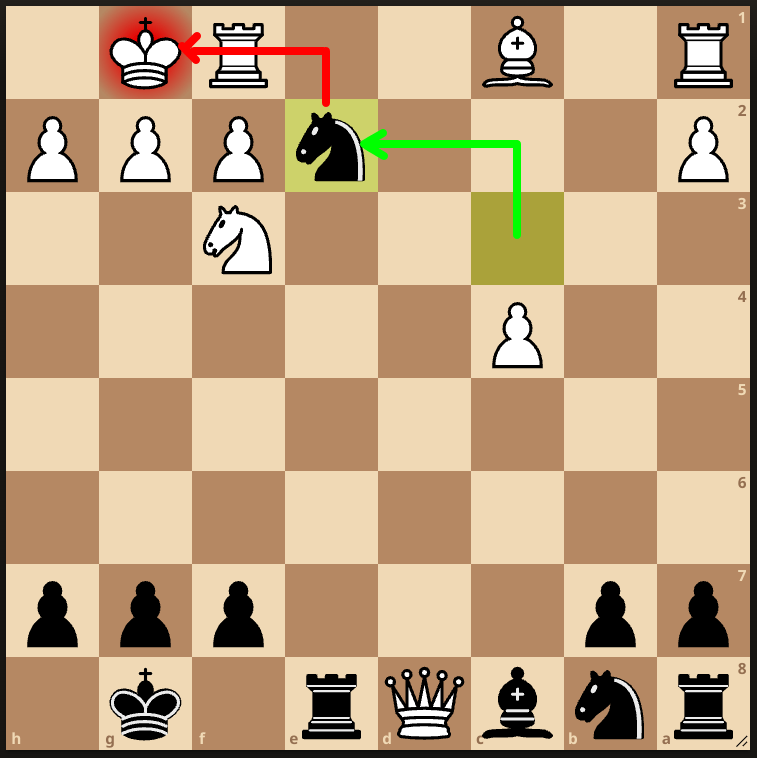
The best move is knight takes bishop on E2, which is also a check on the white king. The white king must move, allowing me to retake the queen on the next move. This illustrates the concept of zwischenzug, an in-between move before retaking a piece.
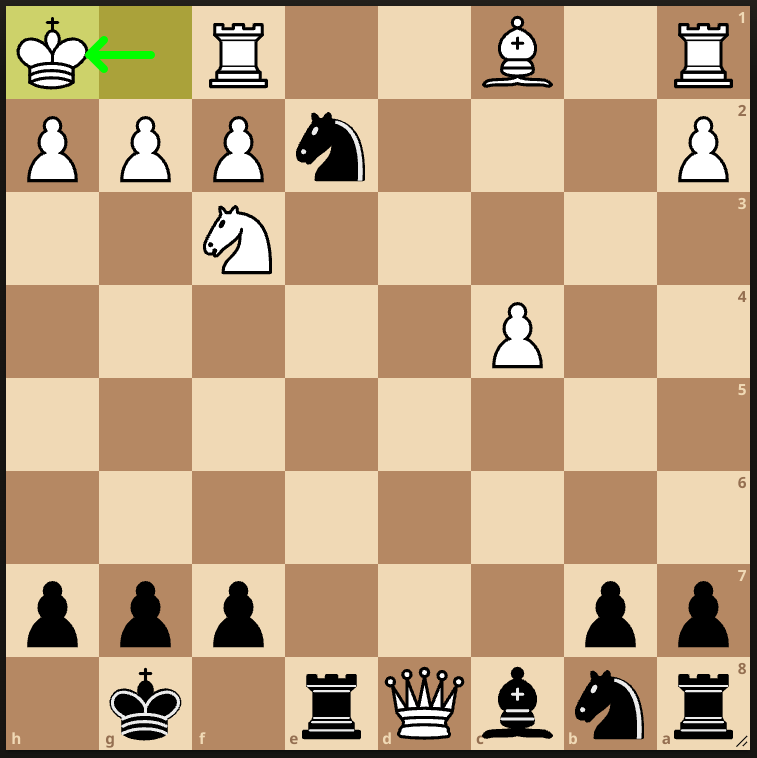
White must either capture the attacking knight (which is not an option), or move the king to H1.
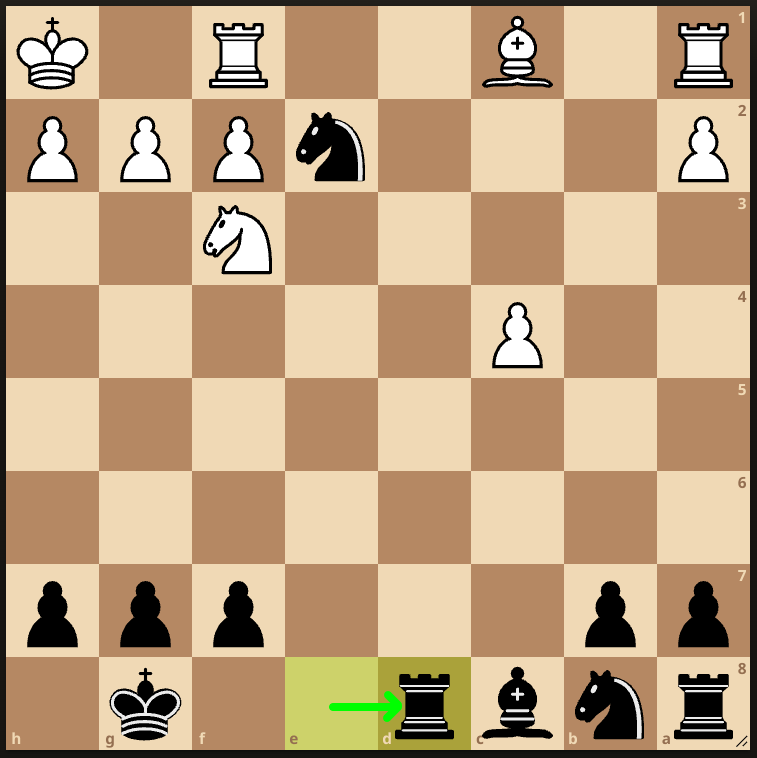
After the white king moves, the rook is able to recapture the queen on D8. I was able to win a bishop by applying the concept of zwischenzug. Note that zwischenzug doesn’t always have to be a check. It could be any threat that proves more costly if ignored.
Hard Puzzle
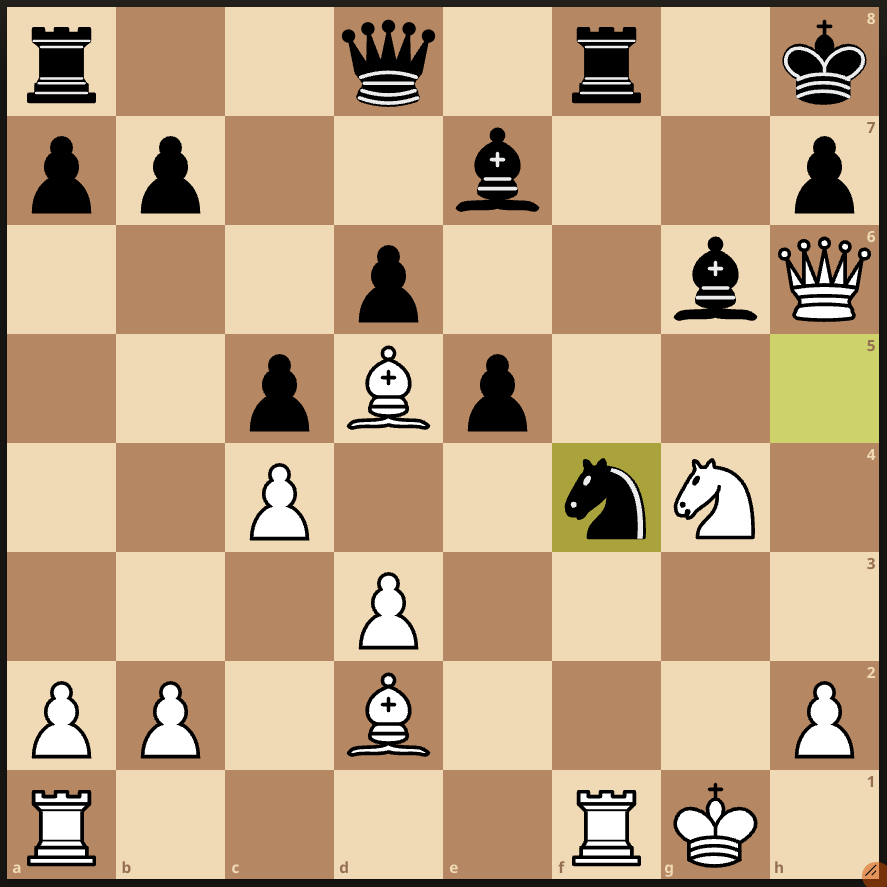
I had trouble with this one. Even though the black king looks a little exposed, there is no obvious tactic, like in the previous puzzles. With hard puzzles, the most obvious move is usually a trap. You need to look deeper to deal a more forceful blow.
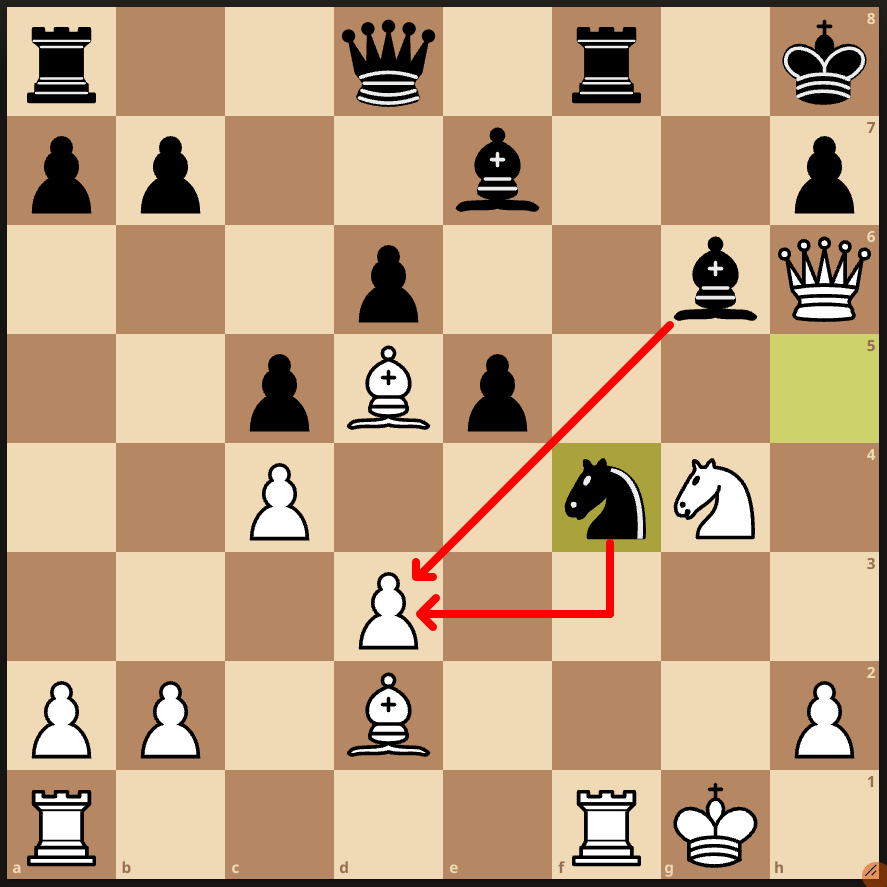
My undefended pawn on D3 is under double attack from black’s bishop and pawn. This is an important pawn that is anchoring my center. Is there a way to defend it? Not really; even if I can rally a piece to defend it, it is already under double attack.
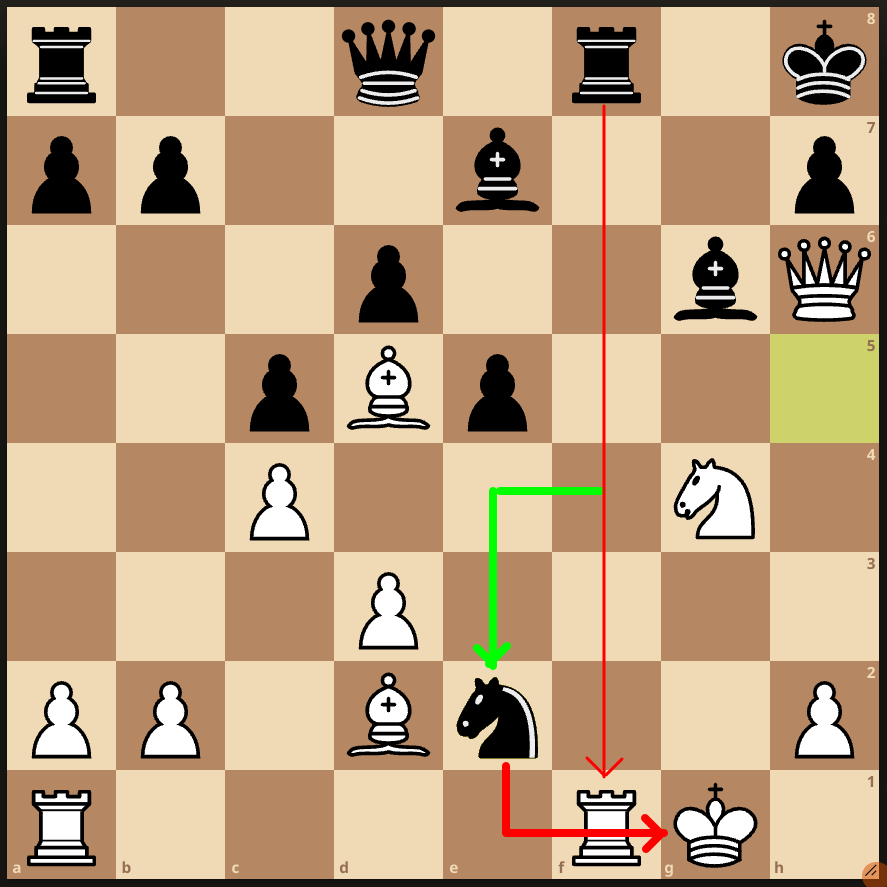
An additional threat is if the black knight moves to E2, which is a check on my king, with a discovered attack on my rook on F1 from the black rook on F8. While my rook is defended by my other rook, I would need to worry about forks from the black knight. This is a pickle indeed, and I will need to look several moves ahead to find a solution.
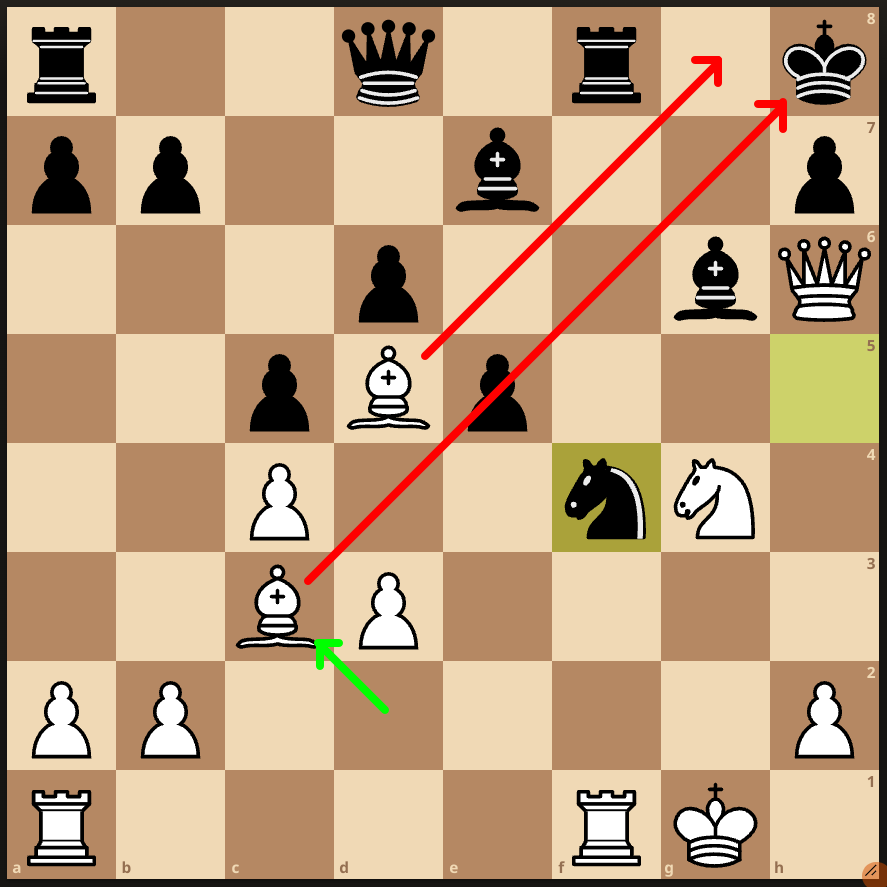
The key is foreseeing this powerful attack using both bishops on the black king, which is difficult to do. The black pawn on E5 would have to move somehow. Before black can cause problems, I must go on the offensive to force black to behave reactively. My goal is to trigger a combination (chain reaction) that ends in my favor.
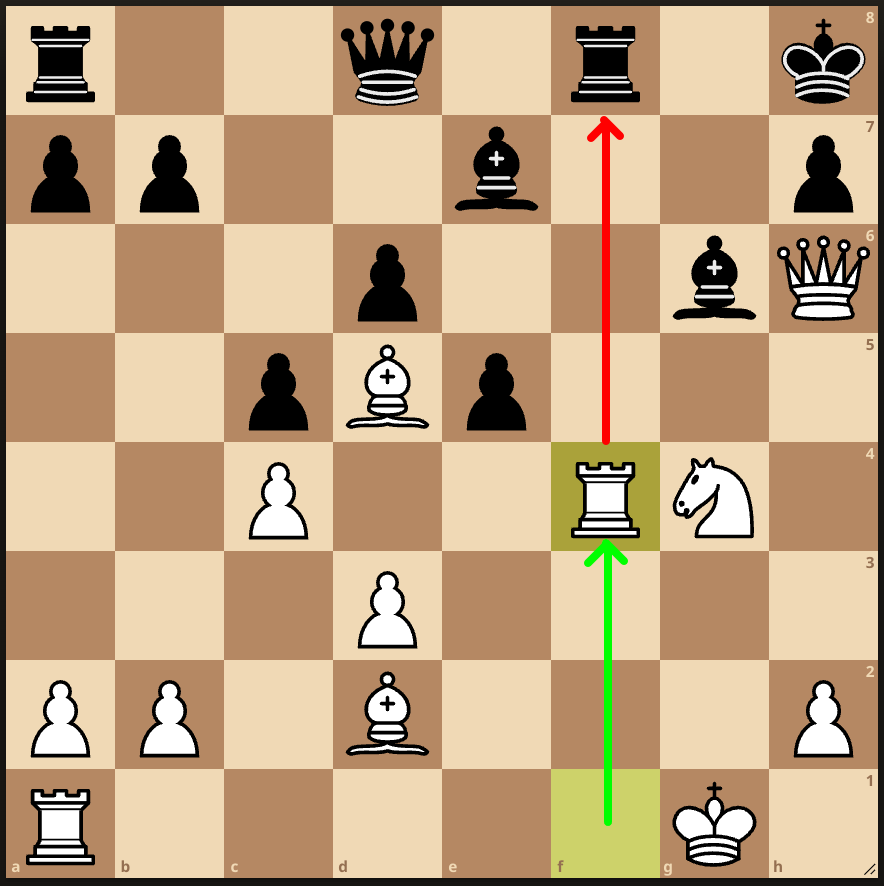
On to the solution. The best move is to remove the dangerous knight on F4 with the rook (we have other plans for the bishop). This is called an exchange sacrifice, because the rook is worth more than the knight (5 pts vs. 3 pts). Black should now retake with the rook or the pawn, because my rook is attacking the black rook.
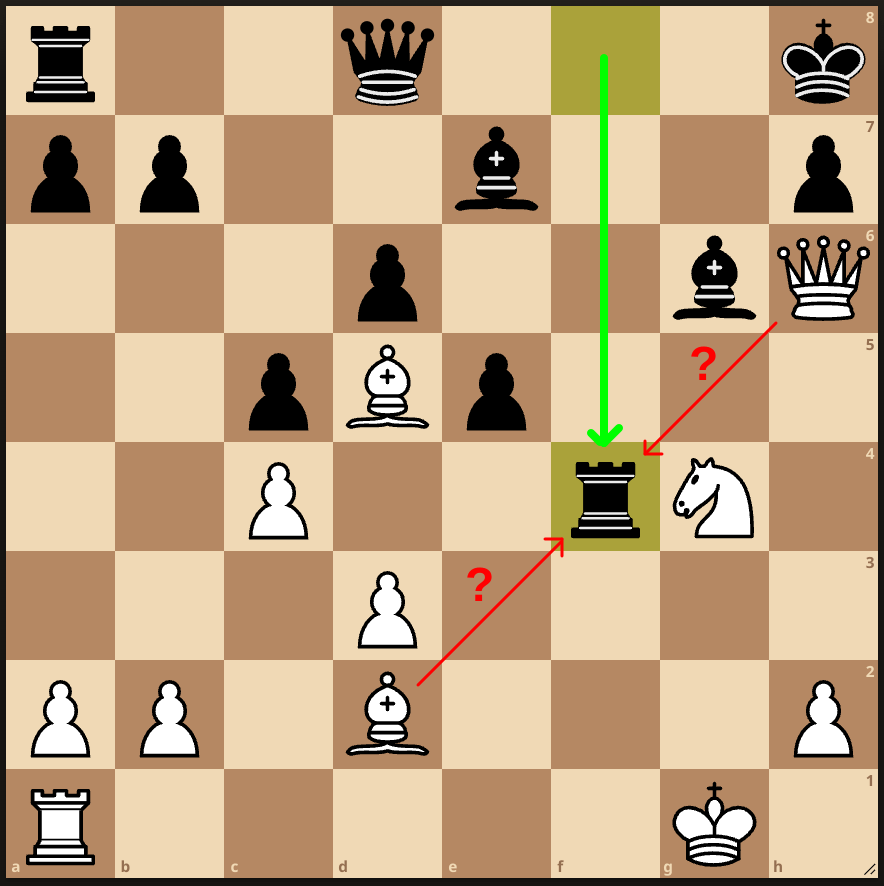
Black retakes with the rook, because the E5 pawn is preventing my dark square bishop from checking the king. So, do we retake with the bishop, or the queen? Retaking with the queen would be another exchange sacrifice (9 pts vs 5 pts), but remember the master plan with the bishop?

Queen takes rook on F4. If black does not retake with the pawn, then white is up by a knight.
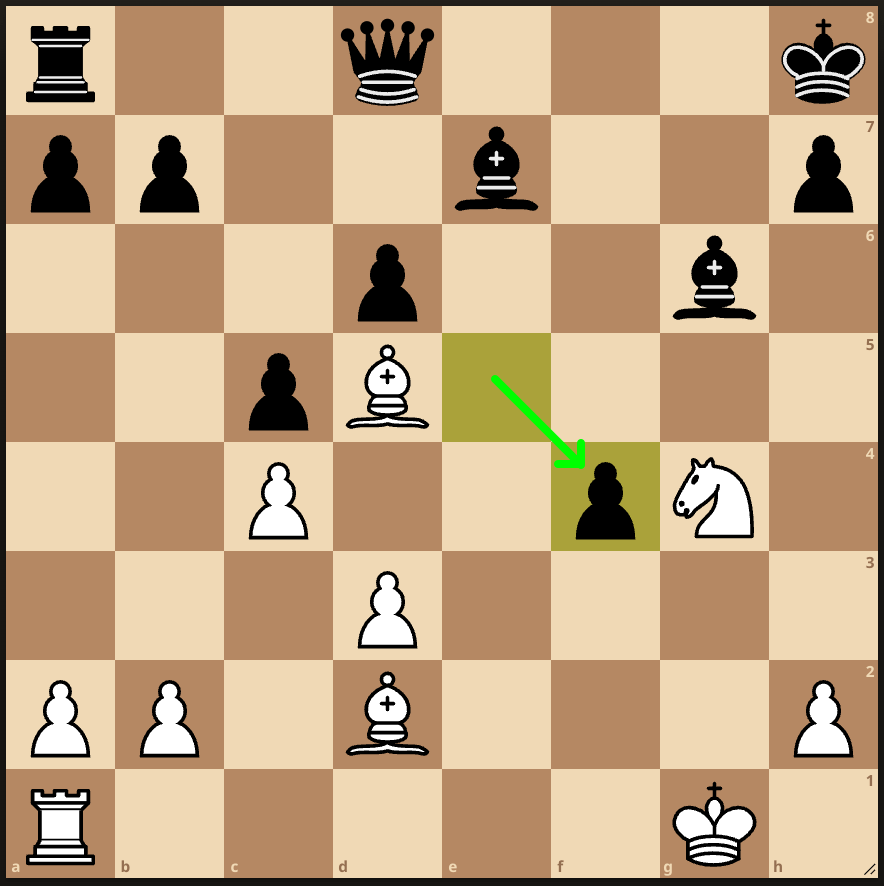
Pawn takes queen, opening up the diagonal for my dark square bishop.

I play bishop to C3, finally unleashing its power. The black king has nowhere to go; it is checkmate unless black can block.
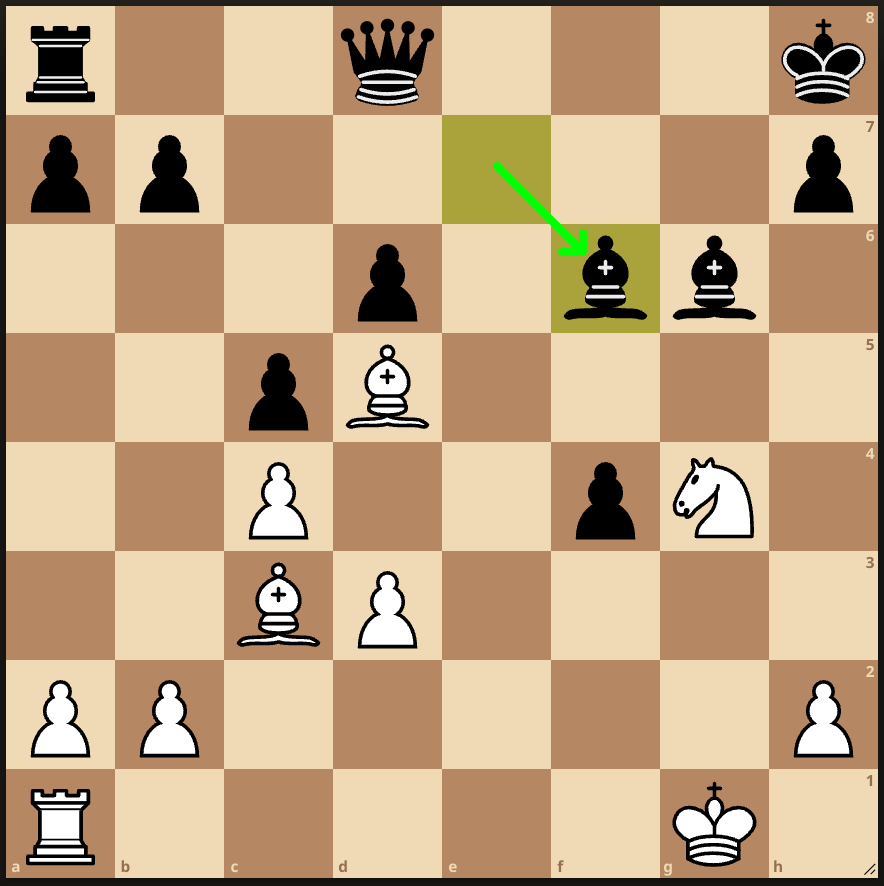
Black has to block with its bishop.
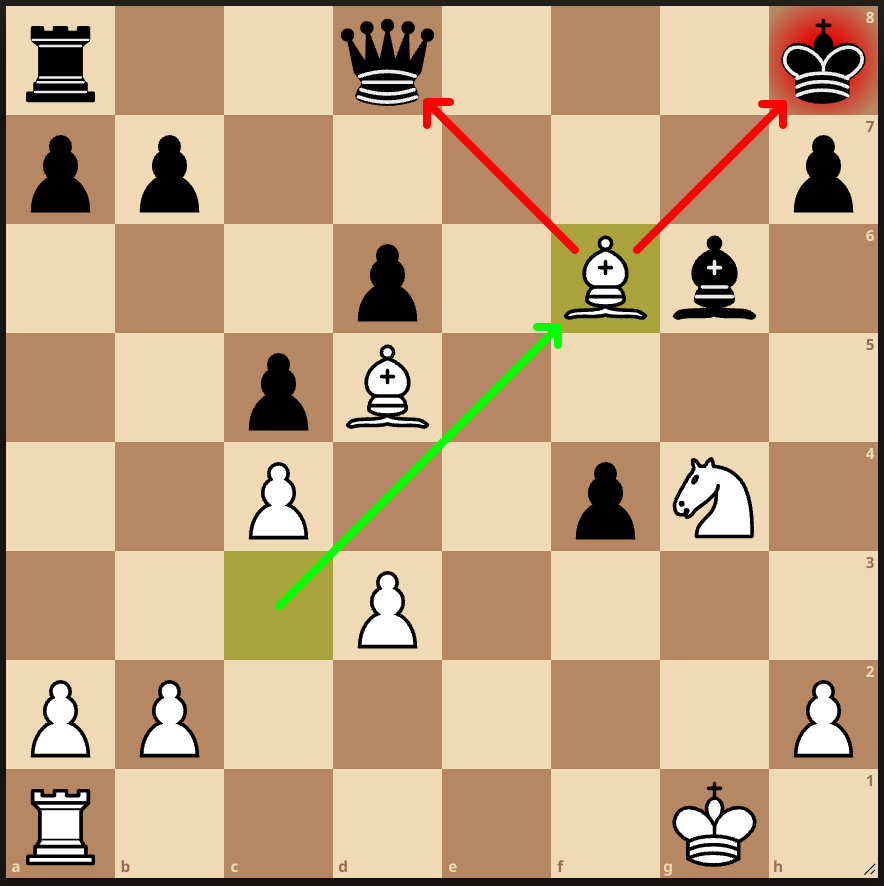
I capture the bishop on F6 and fork the black king and queen. My bishop is defended by the knight on G4.
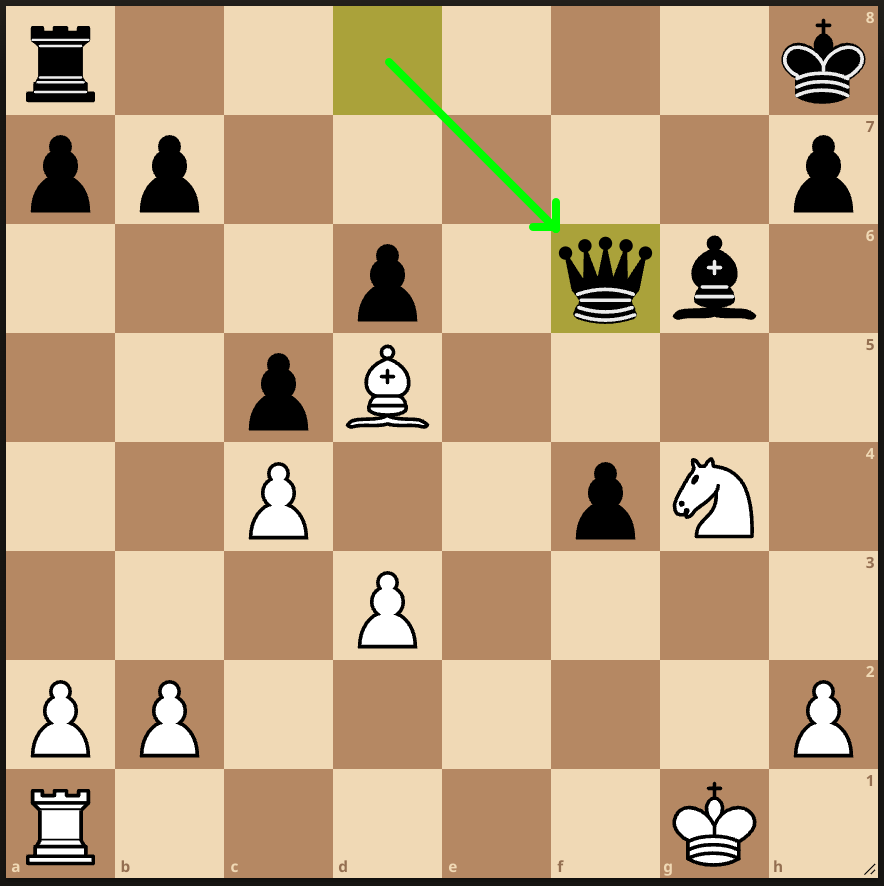
The queen is lost anyway, so she takes my bishop.
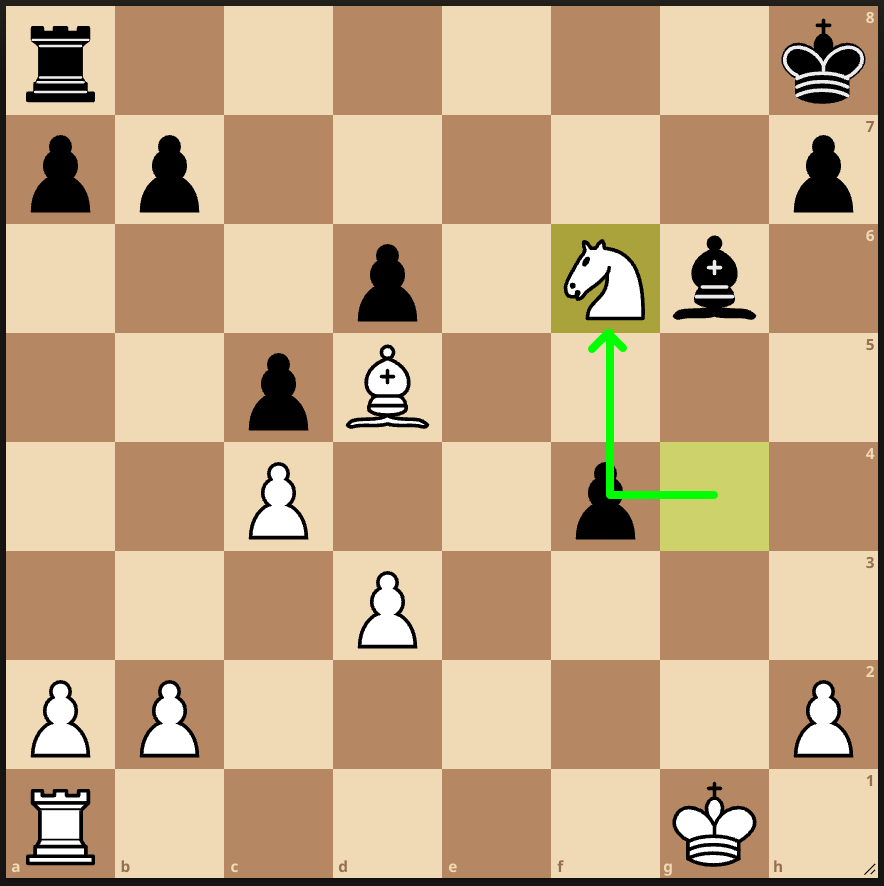
Finally, I retake with the knight. After the dust settles, white is up by a knight, while black has an extra pawn with a clear path in front of it. That passed pawn is dangerous, but white has greatly simplified the game and blunted an imminent attack by black.
While I saw the attack using both white bishops, I did not realize it would take two exchange sacrifices to get there. That is why this is a difficult puzzle, and such a great learning opportunity.
Conclusion
Remember to have fun and be patient. It takes a while to learn all this stuff and train your brain to think this way. I have been doing these puzzles for 5 years, and they have provided me with mental stimulation and a welcome break from needful things. Don’t get frustrated if you don’t progress; the mind takes leaps of insight in unpredictable ways. As with all things, just keep at it, and you will get better.
 Misanthrope Hobbies