
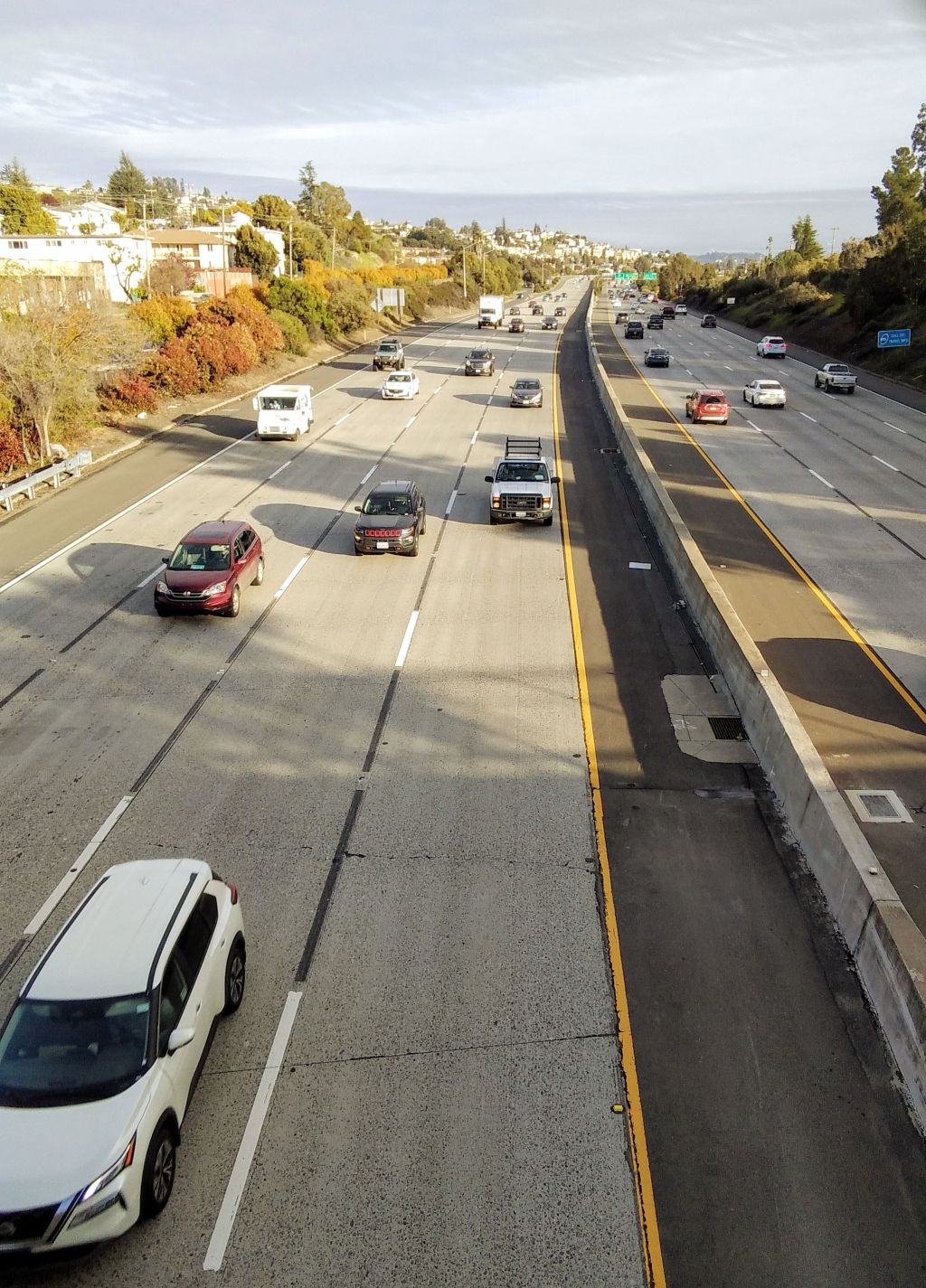
Commuting is a major evil of modern life. Wasting your life away on a congested road, trying not to lose your mind, and not getting angry at people who have, is a dehumanizing exercise that many of us repeat with resignation. For the last 20 years, I have been able to avoid this daily debasement by using public transit in combination with walking, biking or rolling.
Why not drive?
A car is a symbol of empowerment and freedom, but not when it becomes a prison cell on a highway. 2019 data shows the San Francisco Bay Area has the 5th worst commute in the country, averaging 34.1 minutes each way. That means half of the people spend more time in their cars. About the only thing you can do is listen to books, podcasts, music, or call your relatives. The rest of the time is spent driving defensively to avoid tangling with aggressive drivers. These are minutes in your life you will never get back.
Car ownership is expensive. According to AAA, the average cost of owning a car in 2022 is $10,728. That includes things like depreciation, fuel, maintenance, insurance, taxes, registration, and financing. Even if you own a frugal small car, it will still cost thousands of dollars, straight out of your take-home pay. My wife and I share a car that she drives to work, while I use other methods.
Driving in bumper-to-bumper traffic is a waste of non-renewable petroleum, only to pollute the air and spew greenhouse gasses. We are burning up money, and our future, all at once. That is efficient, in a bad way.
I have an issue with road rage, so it is better I keep off the road during commute hours, when drivers behave the worst. Aggressive drivers get my goat, as well as ones who don’t pay attention. Driving can be enjoyable, like during a road trip, with the scenery rolling by as you cruise the open road with a sense of freedom. Commuting is the absolute antithesis of that.
Benefits of not driving
- Time on public transit is yours. Catch up on some emails, read a book, knit, and so on. You don’t need to focus on driving. The most reading I have ever done has been on the train to work. It was 20 minutes in the morning and afternoon when I didn’t have to worry about anything else.
- Less stress.
- Lower cost. I might have spent $1,500 on train tickets a year; a fraction of what it would cost to own a car.
- More time outside. Other ways of getting around involve getting to and from public transit, which means precious fresh air and vitamin D. I am someone who needs outside time, or else I would go insane.
- Built-in exercise. Commuting without a car means I am getting some form of exercise every day. No need for a gym membership.
Disadvantages of not driving
- Low flexibility. If you have children to pick up and drop off, that is difficult to do without a car. I get that. If you have a doctor appointment in the middle of the day, it takes a longer chunk out of your workday.
- Public transit can be a pain. I have had to endure a train strike, and countless cancelled buses. You are relinquishing control to the operator of the service. Other riders can be a nuisance, or downright dangerous. It definitely takes patience and tolerance.
- It limits your options for work. If I found a job posting I liked, the first thing I would do is to see how far it was from public transit. Luckily, I was always able to find something that worked. Perhaps I missed out on that dream job that existed elsewhere.
- Dealing with the elements. It rains, even in California. However, I can usually count the days rain affected my commute on my fingers. Biking in the rain can be quite peaceful. Luckily, I have had alternate ways to get to work, so I have been able to work around the weather 99% of the time.
- It takes longer. Yes, it takes less time to drive usually, but remember the exercise and reading time that is built into the commute if you don’t drive.
Some examples
#1 – When I was a teacher, I lived a mile from my school. It was important that I did not have to rely on public transit so I could be at work on time. I rode my bike every day.
#2 – I lived 22 miles from work and took the BART train. It was a 2 mile bike ride from the station to my company. When BART went on strike, I took Amtrak and had a 9 mile ride to work. Luckily, the strike only lasted 1 week.
#3 – I lived 20 miles from work. I walked 1.1 miles to a train station, rain or shine, where a shuttle bus would take me to work.
#4 – I lived 17 miles away from work. I took the BART train, which was 2 miles to work from the nearest station. I covered that distance on my kick scooter (non-electric). When it rained, there was a shuttle I could take.
#5 – I lived 6 miles from work. Rode my scooter 1/2 mile to catch the bus, then scooted the final mile to work. On rainy days, I could take two buses with door-to-door service.
Conclusion
This kind of commuting isn’t for everyone, and I had to make concessions to make it work. You also need to have public transit options, which might not exist where you live. Ultimately, it was worth it for me to stay out of a car. Many times, the best part of my day was my morning ride into work. I left early, so there were few cars on the road. Watching the sun rise in the crisp morning air is such a delightful feeling. If you are considering ditching the car commute, go for it!
 Misanthrope Hobbies