
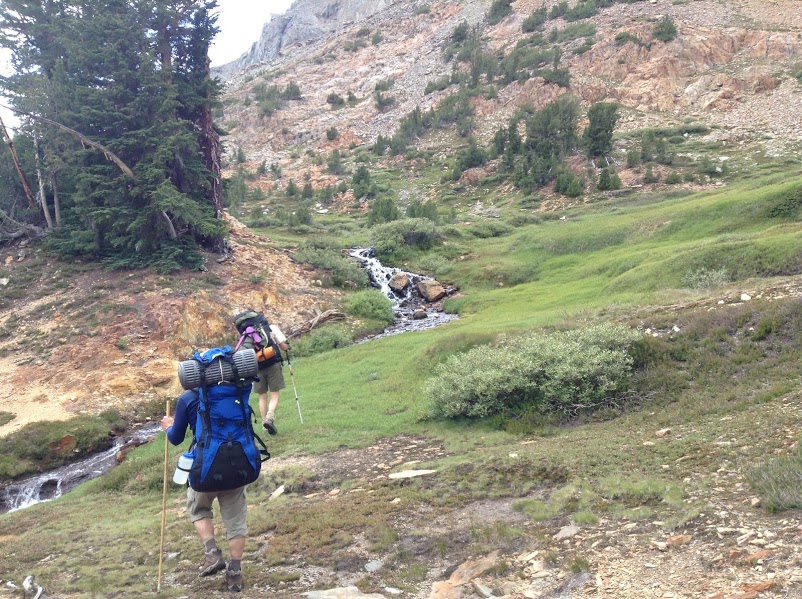
Backpacking is like hiking, except you are carrying everything you need to camp overnight. The setting is usually a beautiful wilderness. There are four basic needs to meet: shelter, food, clothing, and bedding. There is something liberating about cutting the umbilical cord, even if it is just for a few days. This experience teaches some lessons that we can apply in our daily lives.
Go light, be happy
My first backpacking trip was to the Snow Mountain Wilderness in Northern California. I had read a couple of books on backpacking, made a list of gear I wanted to bring, and away I went. I remember my pack was really heavy. There was snow on the ground, which made for tough going. Each hill felt like Mount Everest, and I hadn’t yet learned the advantages of the walking stick. I think we made 5 miles the whole trip. I had a blast, but I remember how weightless I felt at the end of the trail when the pack came off.
The Romans defined a mile as the distance covered by 1,000 steps. By step, they are counting only on one side, so a mile is actually 2,000 steps. Think about one pound on your back. In one mile, you will have lifted it 2,000 times, totaling to a ton. I can feel the difference of a pound in my pack. Any weight you can shed will lessen the wear and tear on your back, knees, and feet. The trip is a lot more enjoyable with a 30 lb. pack instead of a 40 lb. pack.
Think of the last time you moved. At some point during the process, were you shocked by how much stuff you owned? Some folks even pay to store their stuff elsewhere, getting zero enjoyment from their belongings despite the cost. At some point you have to ask, is the burden worth carrying, and would you be more free without it?
Take care of nature
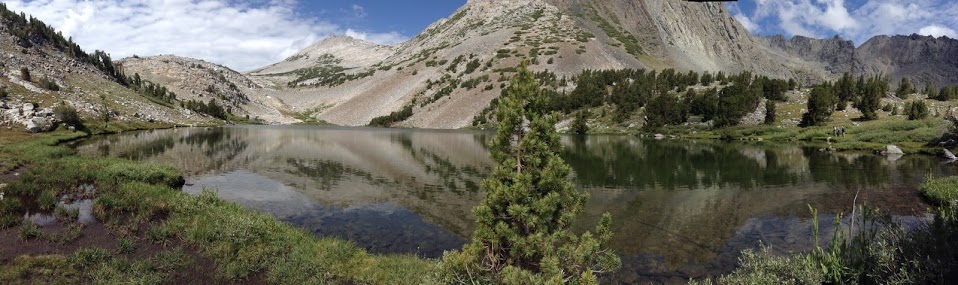
In California, we get to enjoy beautiful alpine lakes in the Sierra Nevada mountains. It is a heavily used wilderness, accessible by a short drive from the densely populated Bay Area. The last thing you want to see, after driving 4 hours and humping a pack for 10 miles, is a campsite littered with used toilet paper. Maybe people think it will dissolve into nothing in a few days (it doesn’t). Maybe they did bury it, but animals dug it up. Either way, that toilet paper will litter the wilderness for years. Do you pick it up? Or collect it and bury it? Nature can’t deal with all the rubbish we leave out, so responsible people need to step up. Sometimes you need to take action on nature’s behalf.
On my first backpacking trip, we used a brand of “bio-degradable” soap. My friends went to a mountain stream and washed their hands directly in it. That was just wrong, for the same reason why you don’t just make bodily functions directly into a stream. It is slightly less convenient to collect some water and wash your hands in a place where the soap can break down in the soil, instead of harming aquatic life. I guess that’s the rub: it’s not always easy to do the right thing, but it’s still the right thing to do.
Choose your companions wisely
In the back country, you want to be with people who think clearly, handle setbacks well, and put the group ahead of themselves. You are a long way from help in the wilderness, and everyone is responsible for each other’s well being. As with all types of travel, there is a heightened need for cooperation within the group. There are important choices to make, like when to stop for the day, where to make camp, and what to do if you get lost. Good communication skills help avoid misunderstandings and hurt feelings. I have been lucky enough to backpack with people who will share the load, chores, food, and good cheer. Life is too short to spend with people who spoil the journey. That is my personal philosophy on and off the trail.
Toil and reward
Ever notice how good food tastes on a backpack trip? I am amazed at how good a freeze-dried dinner-in-a-bag is, sitting around the stove at camp. I doubt that it would taste anywhere as good at home. The special taste comes from carrying that pack, trudging miles to a beautiful spot, and feeling a peaceful weariness. If there was a way to bottle that up and taste it every day. It would be wonderful if work provided this kind of satisfaction, but more often than not, it does the opposite. Outside of backpacking, times I’ve felt this way are after volunteering, during a day trip or after a nice hike. But none of this occurs daily. Maybe I need to find a more suitable career.
Analysis is powerful
It was late into my backpacking career until I made a spreadsheet of my backpacking loadout, and how much each item weighed. I looked at my list, and thought about items I could do without. I was also looking at ways one item could replace two or more items. For example a poncho could replace a rain parka, rain pants, and a pack cover. That is easily one pound of savings. You can argue that a poncho does not perform as well as any of the items it replaces, but the trade-off is worth it outside of a rain forest. Do I need a cup and a bowl? A ground cloth and a tarp? I am not an ultralight hiker by any means; most of my gear is from the 1990’s. However, I have managed to shave several pounds from my kit this way. If I do decide to replace my gear, I know which items to replace to get the largest weight savings.
It makes sense to analyze aspects of our life from time to time. What we spend money on would be one of the closest analogs. Almost the same questions can be asked: what don’t I need? what is redundant? what can be substituted?
Familiar vs. new and improved
The heaviest components of a backpacking kit are the pack itself, the sleeping bag, and the shelter. My pack and sleeping bag are very heavy by today’s standards, but I have not replaced them. I can easily shave 3 pounds off my base pack weight if I did, so why haven’t I upgraded? First, I don’t go backpacking all that much. If I did, perhaps I’d be more motivated. Also, this gear works well. My pack is heavy, but it hauls everything I want, and it’s well padded. It is comfortable and I don’t get sores or blisters from wearing it. I am not sure I could say the same about a newer pack with less padding. My sleeping bag has kept me warm for 25 years, wet or dry, and It’s still in good condition. Sometimes familiar and reliable is better than something new and unknown.
Have a plan
Can you imagine going into the wilderness without a plan? I suppose it is possible, if you have a lot of experience to rely on. Typical planning goes something like this: decide when and how many days the trip will be, pick a location, choose a path, identify where campsites might be, and estimate the mileage for each day. Based on that, decide how much food and clothing you need. I usually bring an extra meal and snacks, and set aside “free time” for day hikes or to make up for any delays. I’ve never run out of food on the trail, but I suppose it would be pretty depressing. If I think about the amount of planning I do for a backpack trip, few other things receive the same meticulous consideration. I think it is easier to wrap our heads around short events with a beginning and an end, but life deserves just as much attention. For most of my life, I cannot say I’ve had a plan. I let my parents decide things into early adulthood, then it was too easy to just let things happen to me. It’s a lot harder to decide what you want in life, let alone make a plan to achieve it. Having a plan is a good thing to aspire to, though.
Conclusion
Spending time outdoors is a great way to see life from a different perspective. Feel free to share your own pearls of wisdom in the comments below. I think I will go find ways to take my own advice, now.
 Misanthrope Hobbies